Same character.
Every panel.
Locked character reference. No LoRA training. No re-describing on every prompt. Your protagonist stays recognizable from panel 1 to panel 400 — with an honest 2026 comparison to every major model below.
Free account. Cancel anytime. Plans from $9.99/mo.
By the TaleAtelier Editorial Team — last reviewed
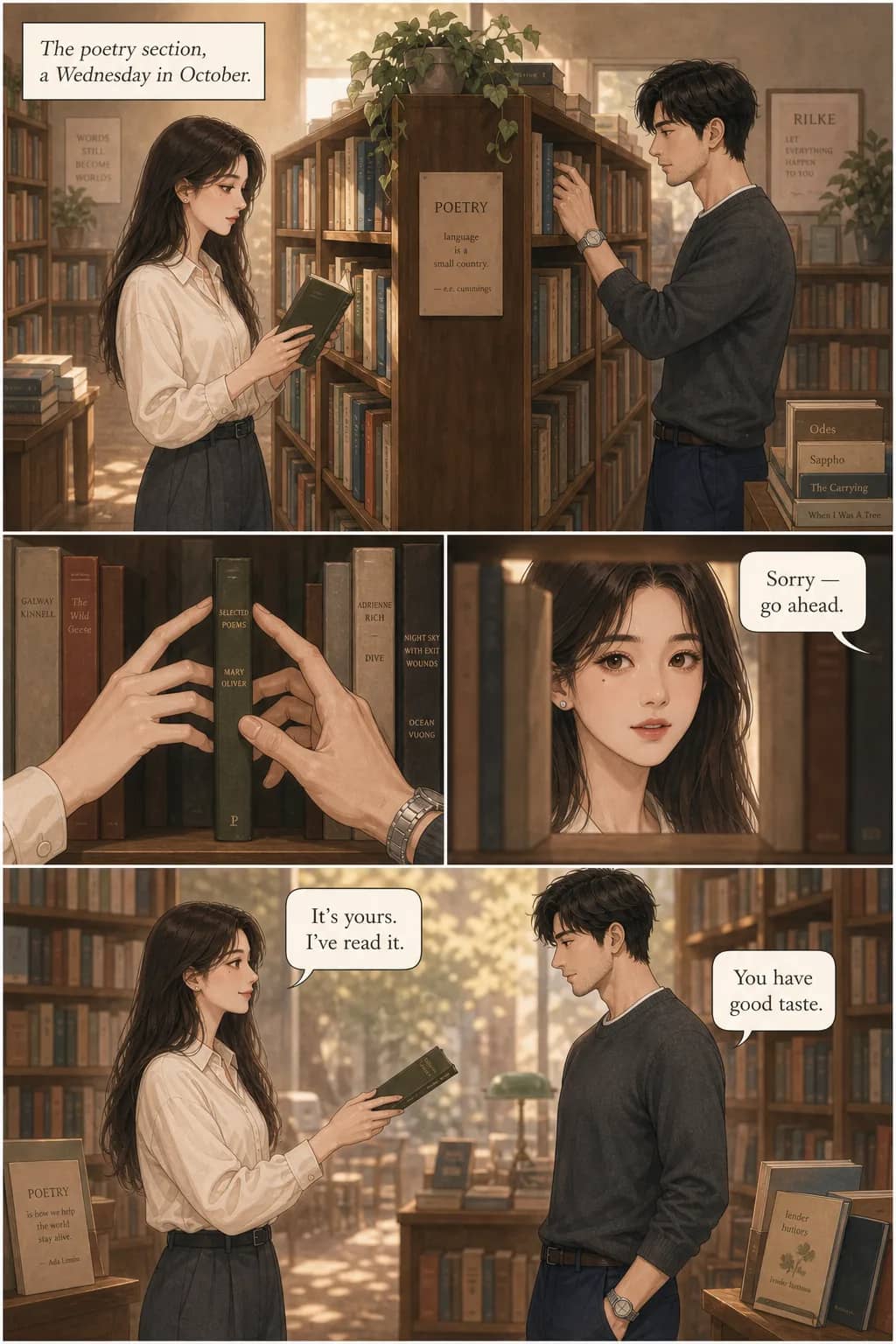
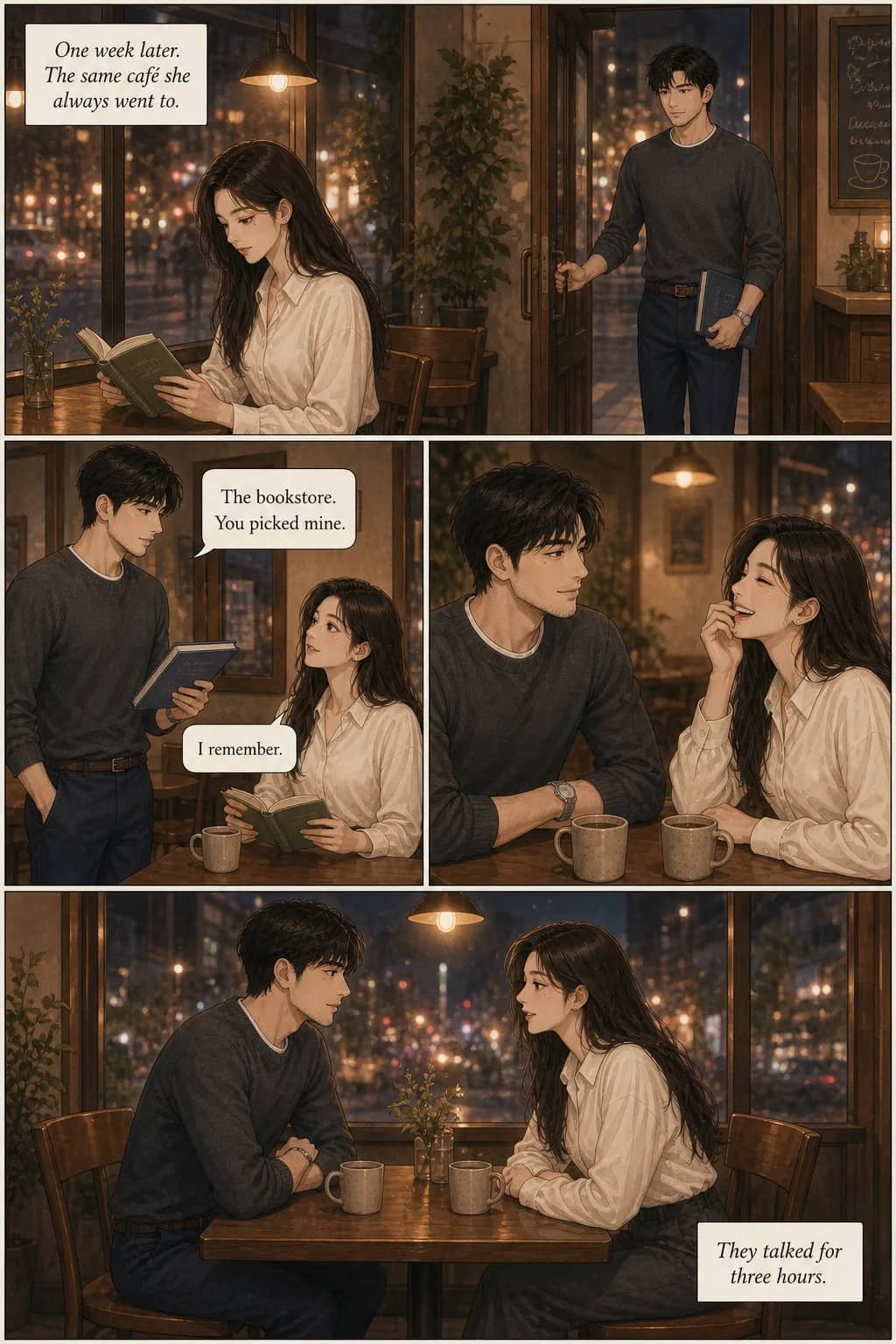
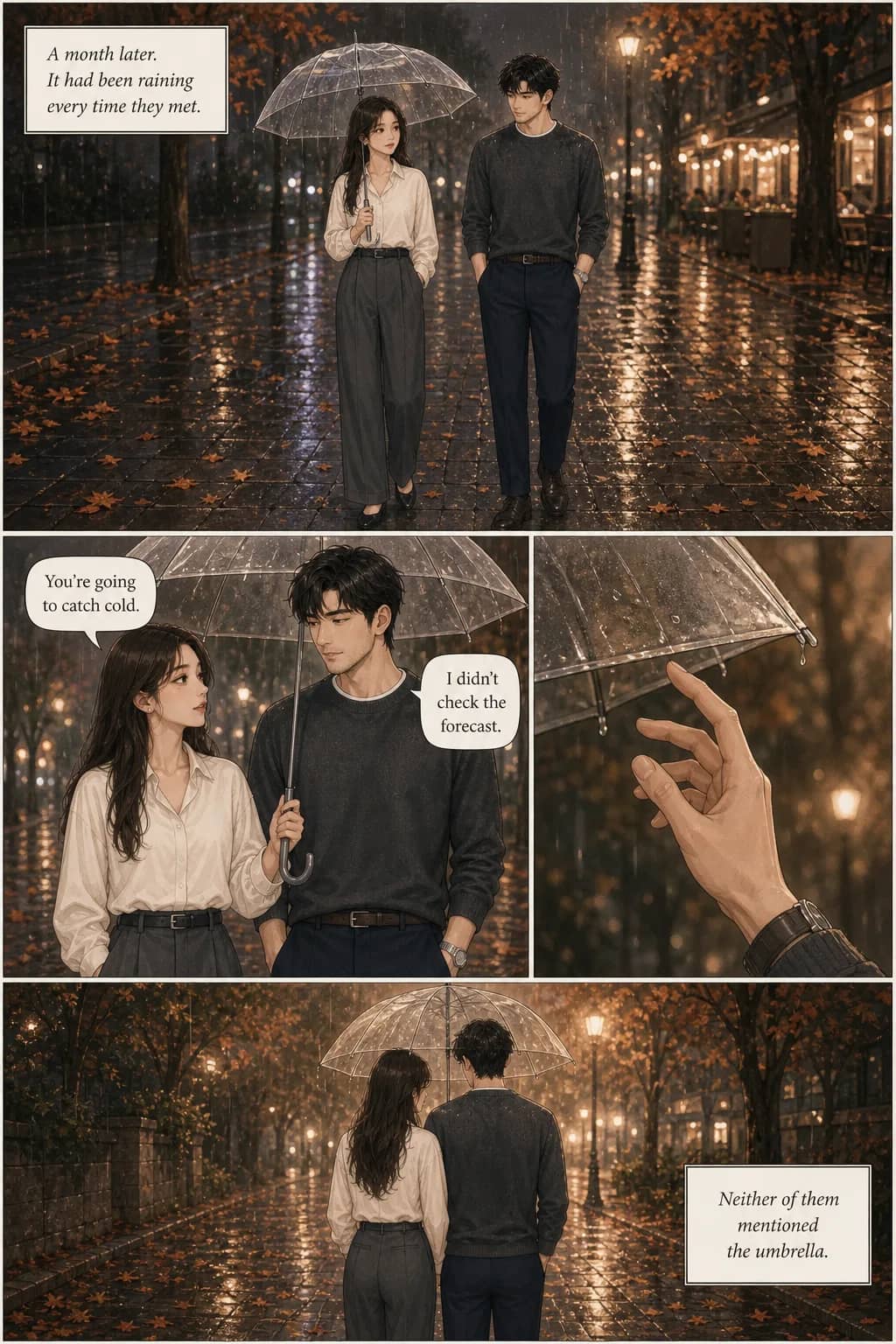
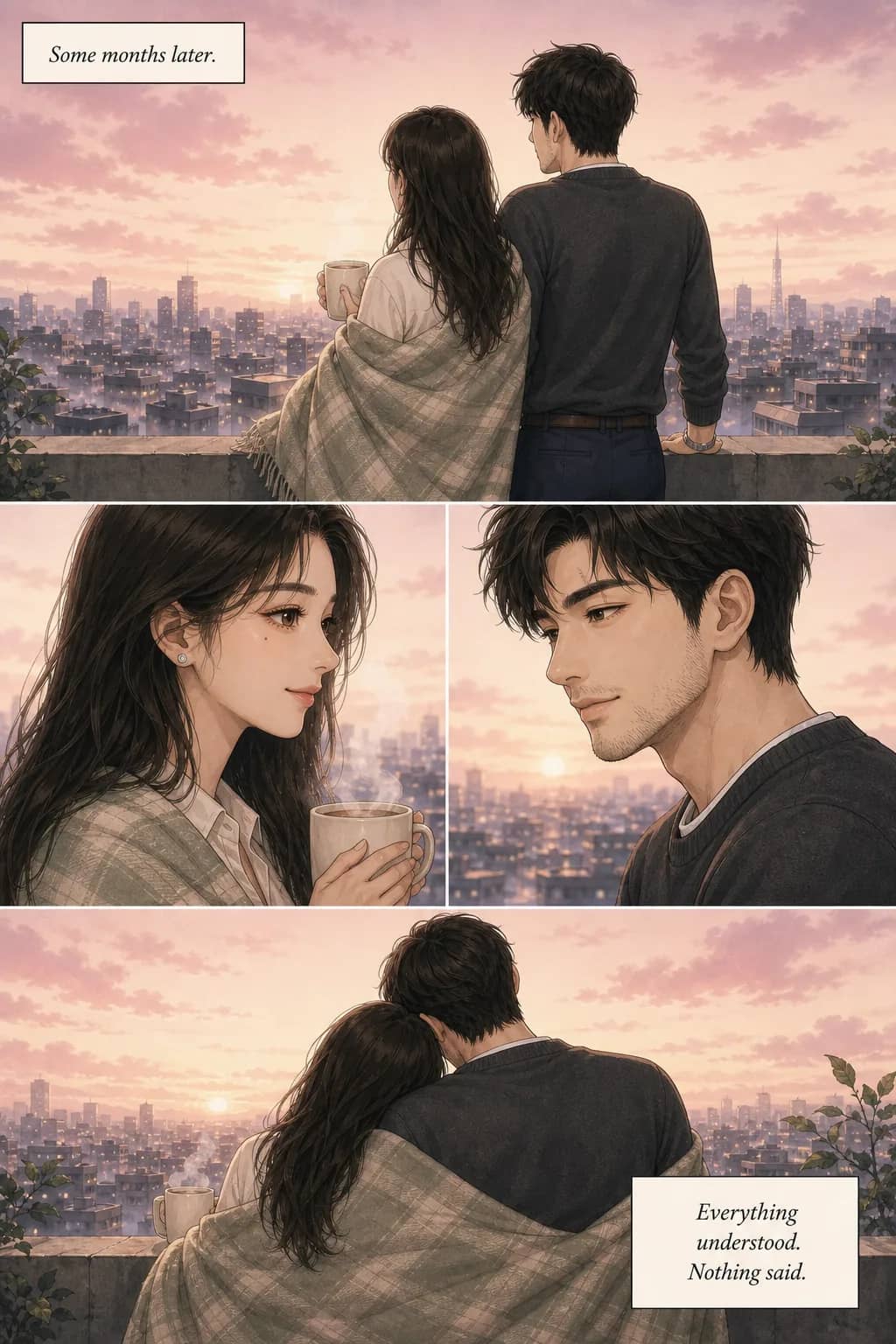
Consistent character AI keeps the same character — same face, same outfit, same identity — across every image or panel you generate. TaleAtelier locks a character reference from your description or photo and applies it across every panel of a story, so your protagonist stays recognizable from panel 1 to panel 400. Free free account, no LoRA training required. Plans from $9.99/mo.
Why AI can't remember your character
Image generation models are stateless by default. Every prompt is a fresh roll of the dice. You describe “a young woman with black hair, wearing a red hoodie,” and the model gives you a young woman with black hair in a red hoodie — a different one every time. Same words, different face.
For a single portrait, that's fine. For a comic where the same character appears in every panel of a 40-page story, it breaks the story. Reader can't tell it's the same character. The narrative falls apart. This is why AI comic tools built around single-image generation produce results that look amateur — the technical foundation isn't there.
Character consistency requires state. The tool has to remember what your character looks like and apply that memory to every subsequent generation. There are three main approaches: locked character references (what we do), LoRA fine-tuning (Stable Diffusion's approach), and per-prompt character reference parameters (Midjourney's cref). Each has tradeoffs — the comparison table below breaks down all six major approaches honestly.
How TaleAtelier keeps characters consistent
Locked character reference (vs regeneration)
When you create a character in TaleAtelier — either by description or photo upload — the tool generates and stores a detailed character reference. Not a prompt string. Not a seed. A structured internal representation of the character's identity: face structure, hair, defining features, typical outfit. This reference is locked to the character's name.
Applied across every panel of a story
Every time you generate a panel that includes that named character, the locked reference is applied automatically. You write “Mira walks into the classroom” on page 1 and “Mira climbs the stairs” on page 40 — the tool pulls the same character reference for both. The face, hair, and identifying features hold across every panel.
What we don't do — LoRA training, per-image hacks
We don't train a LoRA. LoRA fine-tuning is powerful but slow — 1-4 hours per character with technical setup. We don't use per-prompt character reference parameters like Midjourney's cref, which requires you to invoke the reference on every prompt. And we don't rely on seed hacks, which are fragile and break easily. The tradeoff is clear: our approach is faster to set up but less exhaustively trained than a full LoRA. For 40-page comics, this tradeoff heavily favors our method.
How to make a consistent character in TaleAtelier
Four steps from a description or reference photo to a locked character that appears in every panel of your story.
- 01
Describe or upload a character reference
Two paths in. Either describe your character in plain English (hair, eye color, distinctive clothing, one visual quirk) or upload a reference photo of a real person. TaleAtelier turns either input into a locked character reference — a stored fingerprint of the character's identity that gets reused every time the character appears.
- 02
Let the character reference lock
Once created, the character reference is anchored. It doesn't regenerate. Every subsequent panel or page you make with this character pulls from the same reference, so the face, hair, and defining features stay consistent. Add up to 6 characters per story — enough for an ensemble cast with distinct identities.
- 03
Write your story scenes
Describe scenes in plain English, one beat at a time. When you name a character, TaleAtelier applies their locked reference automatically. 'Mira walks into the bookstore' and 'Mira stands on the rooftop' produce panels where Mira looks like the same person in both — not two similar-looking strangers.
- 04
Generate, review, refine
Hit generate. Panels appear with your cast in your setting in your chosen art style. If a specific panel drifts (rare but possible in long chapters), regenerate that single panel — the character reference stays locked, so the redo respects the same identity. Export as PNG or PDF when the sequence reads the way you meant it to.
Character consistency across AI tools
Six methods, honest tradeoffs. Verified against vendor documentation on . Rankings depend on your use case — no single “best” exists.
| Tool | Method | Setup | Multi-panel | Ease | Best for | Pricing |
|---|---|---|---|---|---|---|
| TaleAtelier | Locked character reference (no training) | 1-2 min per character | Yes — every panel, every page | Beginner | Multi-panel stories, comics, webtoons, manga | Paid — from $9.99/mo (2,000 coins) |
| Midjourney (sref + cref) | Style reference (sref) + character reference (cref) parameters | Per-prompt (--cref URL --cw value) | Manual — you re-invoke cref every prompt | Intermediate (Discord + parameters) | Single portraits and style-matching illustrations | No |
| Stable Diffusion + LoRA | Fine-tune a small model (LoRA) on 15-30 reference images | 1-4 hours per character (dataset + training) | Yes, but requires per-panel prompt engineering | Advanced (Kohya / Automatic1111 / Comfy) | Maximum control, local generation, offline use | Free (self-hosted); paid if you use a hosted trainer |
| Leonardo AI | Character reference feature (upload one image) | 1 min per character | Yes, single-image workflow | Beginner | Single-image concept art with character carryover | Yes (daily token limit) |
| Flux | LoRA fine-tune (Flux 1.1 supports character LoRAs) | 1-3 hours (LoRA training) | Yes, with per-prompt LoRA invocation | Advanced | High-fidelity single images, painterly work | Depends on provider (self-host free) |
| DALL-E 3 | Seed / gen ID reuse (no dedicated character reference) | Per-prompt (reuse gen_id) | Weak — face drifts across generations | Beginner | Quick single illustrations, ChatGPT-integrated workflows | Via ChatGPT free tier (limited) |
Midjourney sref and cref — what they do
Midjourney offers two reference parameters. sref (style reference) copies the visual style of a source image — composition, palette, technique. cref (character reference) copies the character's appearance from a source URL, with a --cw weight parameter controlling how strictly. Both require you to invoke them on every prompt. Powerful for single portraits and style-matched illustrations. For 40-panel stories, the manual invocation gets tedious fast.
Stable Diffusion LoRA — the fine-tune path
LoRA (Low-Rank Adaptation) fine-tunes a small model on 15-30 reference images of your character. The result is a .safetensors file you invoke in your Stable Diffusion prompts. Near-perfect consistency, works locally, no per-generation cost. But the training itself takes 1-4 hours per character, needs technical setup (Kohya, Automatic1111, or ComfyUI), and requires you to curate a training dataset. Best method if you have the time and technical skill.
Leonardo, Flux, DALL-E, Sora — quick takes
Leonardo AI has a character reference feature — upload one image, generate with the reference. Good for single-image concept art. Weaker multi-panel support.
Flux (Black Forest Labs) supports LoRA fine-tuning for character consistency. Same tradeoff as SD LoRA — powerful, slower to set up. Flux 1.1 is particularly strong for painterly and photorealistic work.
DALL-E 3 (via ChatGPT) has no dedicated character reference. Best you can do is reuse thegen_id or seed from a prior generation, which produces weak consistency. Works for casual single illustrations, not serialized comics.
Sora (OpenAI) and Kling are video generators — different problem entirely (temporal coherence). If you need video with character consistency, these are the tools; if you need comics, they're the wrong tool.
How to keep your character consistent (technique guide)
Six practical rules that make character references lock harder and drift less. Apply whichever tool you're using.
- 1
Include 3-4 concrete visual details per character
'Pretty girl with dark hair' fails. 'Black hair in a low ponytail, sharp brown eyes, red hoodie, small scar on left eyebrow' succeeds. Concrete details anchor the character reference; vague descriptions produce vague results.
- 2
Lock the reference once, reuse it every scene
Don't re-describe your character on every prompt. Once TaleAtelier has the locked reference, mention the character by name ('Mira enters the kitchen') and the reference applies automatically. Re-describing on each prompt causes drift.
- 3
Use consistent character names across every panel
The character reference stays anchored to the name. Switching to 'the girl' or 'our protagonist' mid-chapter breaks the anchor. Ensemble casts of 3-4 named characters work well; more than five and readers lose track anyway.
- 4
For photo uploads: use one clear, well-lit reference
One high-quality reference photo beats five mediocre ones. Front-facing, good lighting, unobstructed face. Sunglasses, heavy shadows, or extreme angles reduce the fidelity of the locked reference.
- 5
Commit to one art style per story
Style change mid-run breaks reader immersion and can subtly shift how the character reference resolves. Pick your style (manga, manhwa, anime, realistic) in the first chapter and hold it. TaleAtelier keeps the character locked; you keep the style locked.
- 6
If drift happens, regenerate just that panel
Long chapters (30+ panels) occasionally produce a panel where the character drifts slightly. Don't restart the chapter — regenerate the single drifted panel. The character reference is still locked, so the redo pulls from the same anchor.
Character sheets and reference views
Character sheets — front view, side view, three-quarter view of the same character on one page — are the traditional artist tool for locking a character's design before drawing them into scenes. If you're used to hand-drawn workflows, you expect your AI tool to output one.
Here's the honest state today: TaleAtelier's backend already generates a detailed character sheet for every character reference you create — the multi-view representation is stored internally and drives the panel generation. But the frontend UI that would let you view and edit the sheet directly is still in development. You can generate consistent characters today; you can't yet open the sheet editor and tweak it manually.
What's coming: a character editor where you preview the full sheet (front / side / three-quarter / expression variations), edit specific attributes (hair color, outfit, distinguishing features), and save revised versions before regenerating story panels. This closes the last gap between AI-assisted and traditional character-design workflows.
No specific ship date claim — we don't commit to dates we might miss. If character-sheet editing is a hard requirement for your project today, tools like Krita or Clip Studio Paint let you hand-draw sheets that you can then feed as reference photos to our workflow.
Realistic, cartoon, anime, or stylized — all consistent
Character consistency and art style are separate parameters. You lock the character reference once, then pick which style you want the story rendered in. The same character can appear in a manga-style panel, a manhwa-style panel, and a realistic-style panel — and stay identifiable as the same person in all three.
For most stories, we recommend committing to one style per run — readers expect visual consistency across a chapter, and style hopping breaks immersion. But the technical capability is there if your project requires it (dream sequences in a different style, flashbacks rendered differently, etc.). Style presets include anime, manga, manhwa, seinen, and more on the styles hub.
When another tool fits better
Honest routing. TaleAtelier is not the right tool for every character-consistency use case.
Single portrait, no story. For a one-off character portrait or concept-art single image, Midjourney with cref, Leonardo AI, or the exact-match tools (consistentcharacterai.org and similar) are faster. Our tool is built for stories where the same character appears in many panels — overkill for a single image.
Maximum fidelity via LoRA training. If you have 15-30 reference images of a character and the technical skill to train a LoRA, Stable Diffusion + Kohya produces the highest-fidelity character consistency possible. We deliberately don't compete on this — our tradeoff is faster setup at the cost of some fidelity.
Character.ai (chatbot) is a different product. The name is confusing — Character.ai is a conversational AI chatbot platform for talking to AI-personified characters. It has nothing to do with visual character consistency in image generation. If you're looking for character voice / dialogue, that's a different tool category entirely.
Video with character consistency. We generate comic panels, not video. For video with character consistency, Runway, Kling, or Sora are the tools. Video consistency is a different technical problem (temporal coherence) than panel-to-panel comic consistency.
Frequently asked questions
- Is TaleAtelier's consistent character generator free?
- No — TaleAtelier is a paid tool. Generation burns coins, and coins are included in a monthly subscription (Starter $9.99, Plus $24.99, Pro $59.99). Signing up for an account is free — you save characters and story drafts before choosing a plan. We don't offer free generation because compute costs are real and free tiers on generative AI tools get abused fast. Character reference locking works on every paid plan.
- Do I need to upload a photo, or can I describe the character?
- Both work. If you have a specific real person in mind (yourself, a friend, a gift recipient with consent), upload their reference photo and the character's face locks from that photo across every panel. If you're inventing a character, describe them in plain English — 3-4 concrete visual details produce the best locked reference.
- How many characters can I use in one story?
- Up to 6 named characters per story, each with their own locked reference. That's enough for an ensemble cast — protagonist, love interest, best friend, mentor, antagonist. More than 6 gets hard for readers to track anyway. All characters can appear together in the same panel and stay individually consistent.
- What's the difference between character consistency and character reference?
- Character reference is the input — the description or photo you provide that defines what the character looks like. Character consistency is the output property — how well the tool keeps that character looking the same across many generations. TaleAtelier locks the reference so consistency is high across the panels.
- Can I edit a character after I've generated with them?
- Right now, character-level editing is limited — you refine the reference by re-describing or re-uploading. A dedicated character sheet editor is coming (backend character-sheet generation is already in place; frontend UI is in progress). When it ships, you'll be able to edit hair, outfit, and expression details before regenerating.
- How is this different from Midjourney sref?
- Midjourney's sref is a style reference — it copies the visual style of a source image. Cref (character reference) is closer, but you have to invoke it in every prompt with --cref URL --cw parameter. TaleAtelier stores the character once and applies it automatically across every panel of a story. Faster for multi-panel work; sref/cref is better for single-image style matching.
- How is this different from training a character LoRA?
- LoRA training fine-tunes a small model on 15-30 reference images of your character. It's the most powerful method — near-perfect consistency, works locally — but takes 1-4 hours per character and requires technical setup (Kohya, Automatic1111, dataset curation). TaleAtelier uses a locked-reference approach that takes 1-2 minutes per character with no training. Different tradeoffs.
- Can I make consistent anime, cartoon, or realistic characters?
- Yes to all three. TaleAtelier's character reference locks the identity; the art style (anime, cartoon, realistic, manga, manhwa) is a separate parameter you set per story. Same character can appear in an anime-style panel and a realistic-style panel and still be recognizably the same person, though we recommend committing to one style per story for reader continuity.
- Does it work for videos too?
- No — TaleAtelier generates comic panels and pages, not video. For video with character consistency, look at Runway, Kling, or Sora. Video character consistency is a different technical problem (temporal coherence, motion) than panel-to-panel comic consistency, and the tools that solve one don't necessarily solve the other.
- What if my character drifts halfway through a story?
- Regenerate the drifted panel. The character reference stays locked across the whole story, so a single-panel drift is fixable without restarting. If drift becomes systematic (multiple panels off), your description may be too vague — refine the reference with 3-4 concrete visual details and re-run.
- Can I use the same character in multiple stories?
- Yes. Character references persist in your character library. Create Mira once, use her in story 1, story 2, and story 3 — she'll look the same across all three because they pull from the same locked reference. Useful for serialized webtoons or recurring characters across a franchise.
- Does it output a character sheet with front, side, and three-quarter views?
- Not on the frontend yet. Backend character sheet generation is already in place — each character reference has a detailed multi-view sheet stored internally — but the editor UI that lets you view and modify it is shipping soon. When it ships, you'll be able to preview and edit the reference sheet before generating story panels.
- Which AI is best for consistent characters?
- Depends on your use case. For multi-panel comic and story work, TaleAtelier's locked-reference approach fits best. For maximum fidelity on a single character across unlimited scenarios, Stable Diffusion + LoRA wins if you can invest 1-4 hours in training. For single portraits, Midjourney cref and Leonardo AI both work. There is no single 'best' — there are best-for-a-specific-use-case.
- Can I use my own photo as a character reference?
- Yes, via our photo-to-comic workflow. Upload a reference photo of yourself, a friend, or someone who has consented to be the reference, and their face locks across every panel. See our dedicated photo-to-comic page for the full flow and consent guidance.
- Do you support multi-character stories with 3-4 named characters?
- Yes. Up to 6 characters per story, each with their own locked reference. Panels that include multiple characters render each one from their own reference, so a Mira-and-Kei two-shot has both characters looking like themselves. This is the harder version of the consistency problem, and it's what the tool is built for.
Where consistent character AI shows up in the rest of TaleAtelier
AI character creator — the tool this pillar recommends. D&D, OC, anime, fantasy, cyberpunk, chibi character generation with locked identity across every panel.
Photo to comic — upload a real photo (yourself, a friend, a gift recipient with consent) and use it as the locked character reference across your story.
Photo to manga — same photo-input workflow, tuned for manga-specific style output (shonen, shojo, seinen, chibi).
Text to comic — text-input path with three tiers (prompt, short story, full script). Long-form paste supported up to novel-chapter length.
AI comic generator — general multi-panel comic generation with the character consistency engine built in. Any style, any story.
AI manga generator — manga-specific format with character consistency, shonen / shojo / seinen styles, and baked-in speech bubbles.
AI webtoon maker — dedicated tool page for vertical-scroll webtoon generation with character consistency across every panel of every episode.
How to make a webtoon — full webtoon-creation guide that includes character consistency as one of the two path options (traditional drawing vs AI-assisted).
How to make a comic — parent guide covering the full workflow across comic strip, comic book, and graphic novel formats. Character consistency is one section inside this broader guide.
Manga vs manhwa vs manhua — the definitional guide to the three national comic traditions, useful before you pick which output style to generate.
Comic strip maker — dedicated 3–9 panel strip tool with panel-count guidance and 15 story-starter ideas.
Lock your first character
this week.
Create a free account, set up your character, and pick a plan when you're ready to generate. Monthly plans from $9.99. Cancel anytime.
Create your first characterLast reviewed . Competitor data verified against vendor sites same day.