Manga vs manhwa vs manhua.
Japanese, Korean, and Chinese comics compared. Meaning, differences, reading direction, art style, and how to tell them apart.
By the TaleAtelier Editorial Team, operated by AI Solution Labs — last reviewed . Etymology verified against Merriam-Webster, Britannica, and Wiktionary.
Manga, manhwa, and manhua are the Japanese, Korean, and Chinese words for comic book — all three come from the same two Chinese characters (漫畫, meaning “whimsical pictures”). Manga is Japanese, usually black-and-white, read right-to-left. Manhwa is Korean, usually full-color, read left-to-right or as vertical scroll webtoons. Manhua is Chinese, usually full-color and digital-first.
What each one looks like
One scene, drawn three ways. Same two characters, same rooftop, same framing, same line of dialogue — the only thing that changes between these three pages is the art tradition.
Most comparisons put three unrelated pages side by side, which shows that the three look different without showing why. Holding everything else still isolates the difference: what you are seeing below is the tradition, not the story.
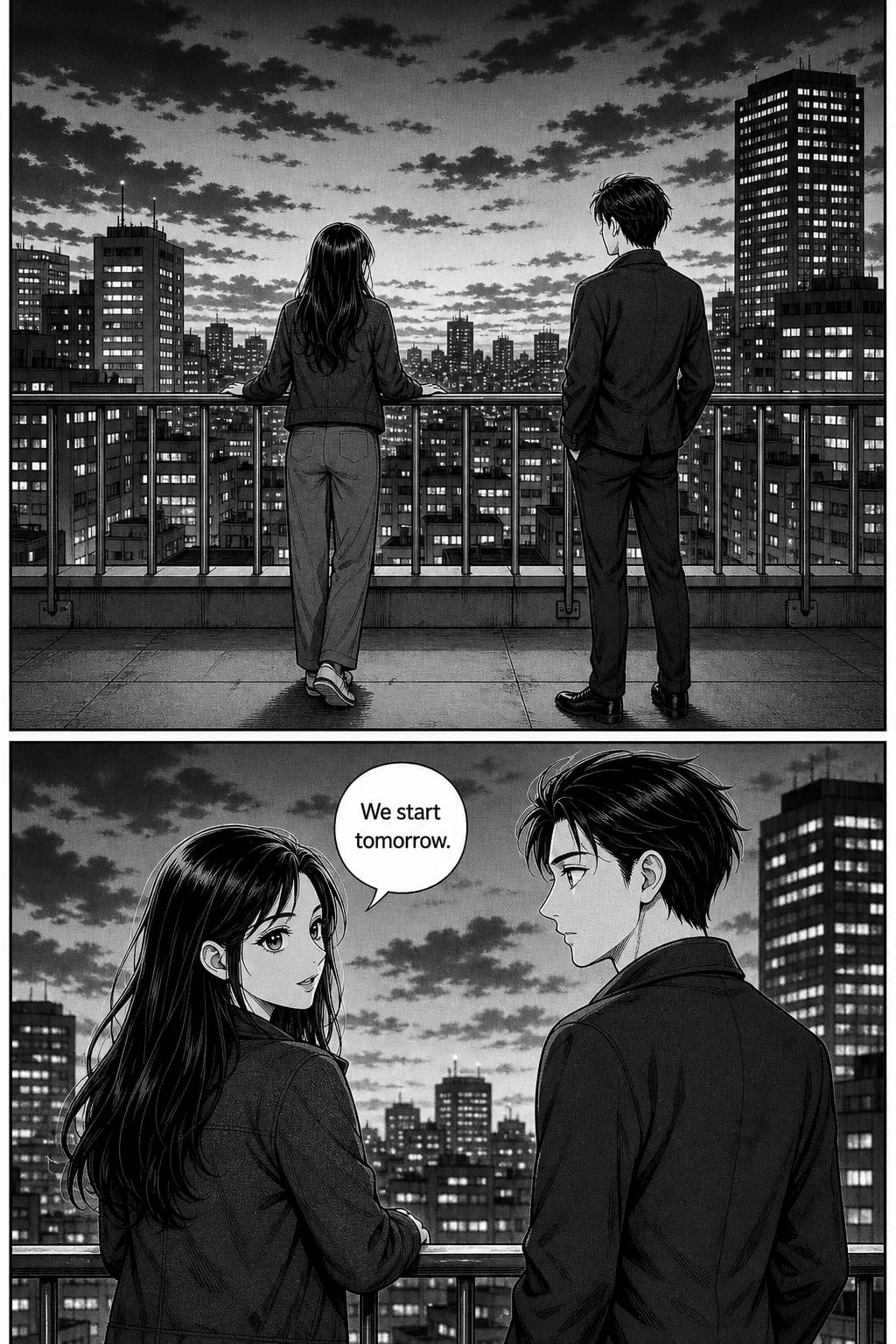
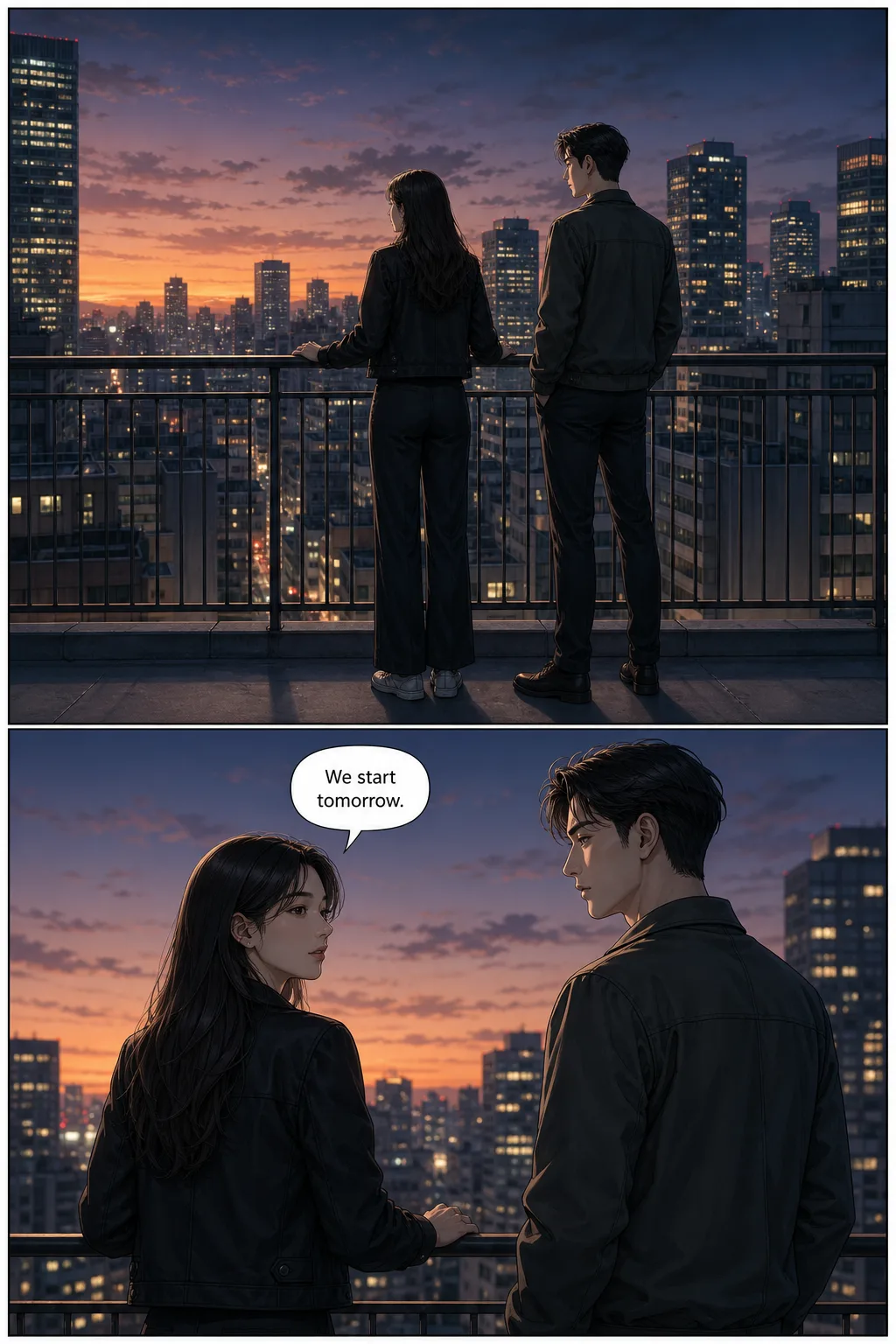
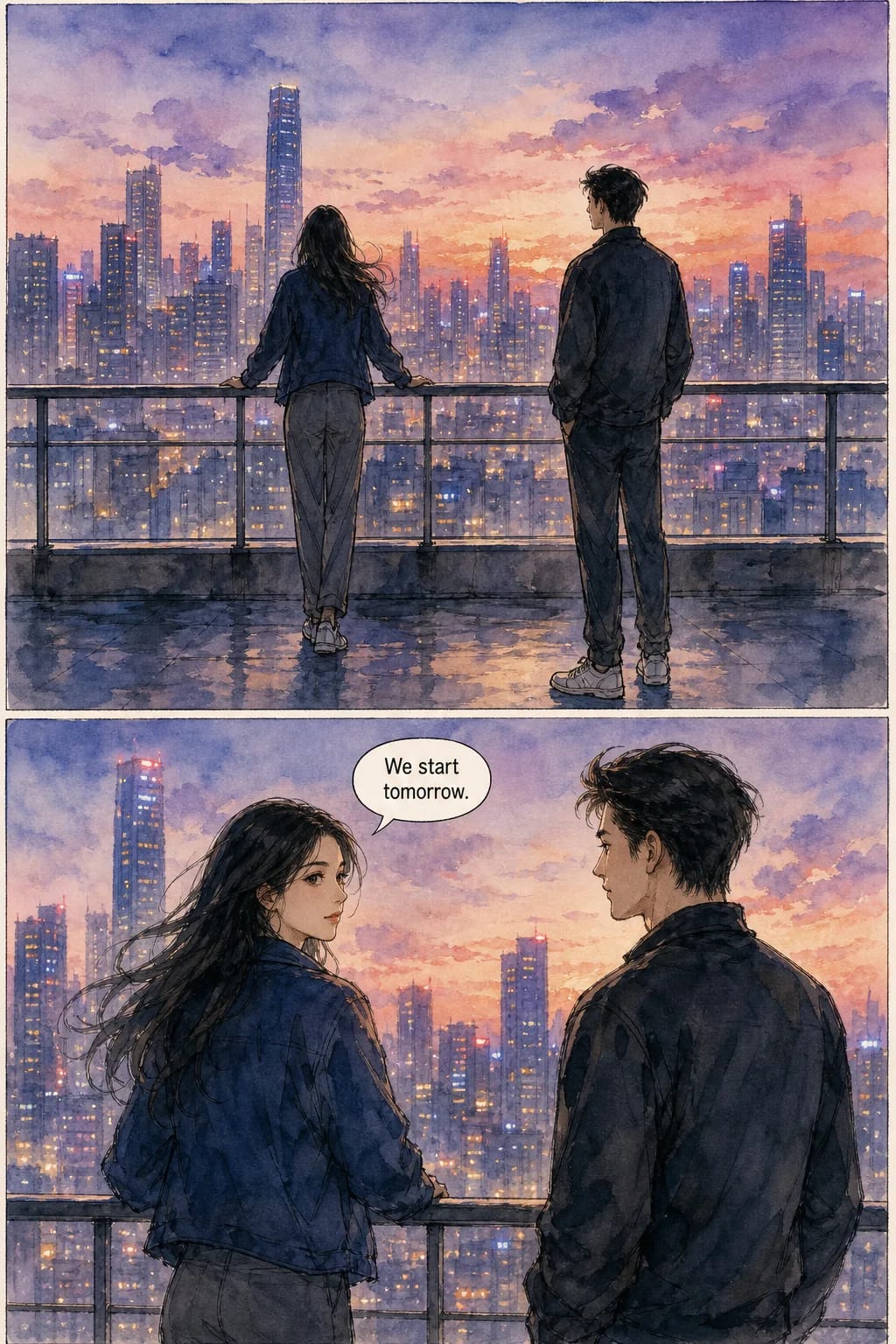
All three pages generated with TaleAtelier from one prompt, with only the art-style setting changed between them. Not stock art, and not panels scanned from published series — the point of the comparison is that nothing except the tradition differs, which is only possible when the pages are made rather than collected.
One name, three languages — 漫畫
All three names — manga, manhwa, manhua — come from the same two Chinese characters:
The compound literally means “whimsical pictures.” Japanese pronounces it manga, Korean pronounces it manhwa, Mandarin Chinese pronounces it manhua. Same characters, same core meaning, three different national comic traditions that grew up around them.
The Japanese usually write it in simplified form (漫画), the Chinese use either traditional (漫畫) or simplified (漫画), and Koreans usually write it in Hangul (만화) but the Chinese-character origin (漫畫) is well documented in Korean linguistic sources.
How to pronounce manga, manhwa, and manhua
All three are two syllables with the stress light and even. Manga is MAHN-gah — a short open a, not the a in “man.” Manhwa is MAHN-hwa, and manhua is mahn-HWAH.
Manhwa and manhua are not pronounced the same, though they land close enough that mixing them up is normal. The Korean is [ˈma̠(ː)nβwa̠]: the ㅎ in 만화 softens between the n and the w until it is barely a breath, which is why the word is so often described as having a silent h. It is not silent, just lenited — you hear a cushion where the h sits, not nothing. The Chinese is mànhuà, /män⁵¹ xu̯ä⁵¹/, both syllables on a falling fourth tone, and the h there is a real rasped consonant closer to the ch in Scottish “loch.” The practical tell: Korean softens the middle, Mandarin scrapes it.
Pronunciation reference: Wiktionary, “만화” and Wiktionary, “漫畫”. Etymology reference: Merriam-Webster, “manga” and Britannica, “Manga”.
What does “manga” mean?
Manga is the Japanese word for comic book or graphic novel. Written 漫画 in Japanese, the word combines 漫 (man, meaning “whimsical” or “impromptu”) and 画 (ga, meaning “pictures”). It literally translates to “whimsical pictures.”
Origin
The word “manga” was popularized by Japanese artist Katsushika Hokusai, who used it as the title of his sketch collections (Hokusai Manga, published from 1814). The term existed earlier but Hokusai's work fixed it as the standard label. Modern manga in the story-driven form we know today dates to Osamu Tezuka's post-war work — Astro Boy (1952) is generally credited as the foundational modern manga.
Named examples
One Piece (Eiichiro Oda, 1997+), Naruto (Masashi Kishimoto, 1999-2014), Berserk (Kentaro Miura, 1989+), Demon Slayer (Koyoharu Gotouge, 2016-2020), Attack on Titan (Hajime Isayama, 2009-2021), Vagabond (Takehiko Inoue, 1998+).
Reference: Britannica, “Manga”; Merriam-Webster, “manga”; Frederik L. Schodt, Manga! Manga! The World of Japanese Comics (Kodansha International, 1983, ISBN 978-0-87011-752-7). Verified .
What does “manhwa” mean?
Manhwa is the Korean word for comic book. Written 만화 in Hangul or 漫畫 in the original Chinese characters, it's the same two-character compound as manga — just pronounced with Korean phonetics. Same literal meaning: “whimsical pictures.”
Origin
The term manhwa emerged as a distinct Korean concept in the early 20th century. Korean comics existed before, but the word manhwa as we know it dates to the 1920s-30s. The modern webtoon era — which transformed manhwa into a globally recognized format — started in the early 2000s with Naver Webtoon and Daum Webtoon platforms in South Korea. This is when manhwa shifted from print-first to digital-first, from black-and-white to full color, and from horizontal pages to vertical scroll.
Named examples
Solo Leveling (Chugong, art by DUBU, 2018-2021, KakaoPage), Tower of God (SIU, 2010+, Naver Webtoon), Lore Olympus (Rachel Smythe, 2018+, WEBTOON), Noblesse (Son Jeho and Lee Kwangsu, 2007-2019), The God of High School (Yongje Park, 2011-2022), Bastard (Kim Carnby, 2014-2017).
Reference: Wikipedia, “Manhwa”; Naver Webtoon and KakaoPage official platform records; Korean Culture and Information Service (KOCIS) publications on Korean comics history. Verified .
What does “manhua” mean?
Manhua is the Chinese word for comic book. Written 漫畫 in traditional Chinese or 漫画 in simplified — same two characters as manga and manhwa, this time with Mandarin pronunciation. The term covers comics from mainland China, Taiwan, and Hong Kong.
Origin
Manhua as a distinct term dates to the 1920s-30s in Republic-era China. Feng Zikai is often credited as an early modern manhua artist. The Chinese comics industry was disrupted mid-century and re-emerged strongly in the 2000s alongside digital publishing. Modern manhua is largely digital-first, published on platforms like Bilibili Comics, Kuaikan Manhua, and Tencent Animation. Cultivation and xianxia genres dominate the popular tier.
Named examples
Tales of Demons and Gods (Mad Snail, 2015+), The King's Avatar (Butterfly Blue, adapted to manhua from web novel), Battle Through the Heavens (adapted from Tian Can Tu Dou's xianxia novel), Soul Land (Tang Jia San Shao), Martial Peak.
Manhua vs donghua — what's the difference?
Manhua is Chinese comics; donghua is Chinese animation. They are two different media, not two words for the same thing. If you read it, it is manhua; if you watch it, it is donghua.
The relationship is the same one manga has with anime, and the characters say so. Donghua is written 動畫 (dònghuà) — 動 dòng, “to move,” plus the same 畫 huà, “pictures,” that ends 漫畫. Comics are whimsical pictures; animation is moving pictures. Adaptation runs in one direction most of the time: a popular manhua gets a donghua on Bilibili or Tencent Video, the way Battle Through the Heavens has run for multiple animated seasons since 2017.
For the dedicated deep-dive on Chinese comics — cultivation genre traditions, the full donghua adaptation pipeline, and honest reading access for English audiences — see our companion guide what is a manhua.
Reference: Britannica, “Manhua”; Bilibili Comics platform listings; Wendy Siuyi Wong, Hong Kong Comics: A History of Manhua (Princeton Architectural Press, 2002, ISBN 978-1-56898-269-4). Character glosses for 漫畫 and 動畫 from Wiktionary, “動畫”. Verified .
Manga vs manhwa vs manhua — comparison table
Every attribute side-by-side. Scannable, screenshot-able, accurate as of .
| Attribute | Manga | Manhwa | Manhua |
|---|---|---|---|
| Country of origin | Japan | South Korea | China (also Taiwan, Hong Kong) |
| Written as | 漫画 (Japanese) | 만화 / 漫畫 (Korean) | 漫畫 / 漫画 (Chinese) |
| Literal meaning | "Whimsical pictures" | "Whimsical pictures" (Korean reading) | "Whimsical pictures" (Chinese reading) |
| Reading direction | Right-to-left, top-to-bottom | Left-to-right; often vertical scroll | Left-to-right (varies by publication) |
| Typical color | Black and white | Full color (webtoon era) | Full color (digital-native) |
| Publication format | Print magazines then tankōbon volumes | Vertical-scroll webtoons on Naver, KakaoPage, WEBTOON | Digital platforms including Bilibili Comics, Kuaikan |
| Notable examples | One Piece, Naruto, Berserk, Demon Slayer | Solo Leveling, Tower of God, Lore Olympus | Tales of Demons and Gods, The King's Avatar |
| Pronunciation | MAHN-gah — 2 syllables | MAHN-hwa — 2 syllables, the h softened almost to a w | mahn-HWAH — 2 syllables, Mandarin mànhuà |
| Commonly-cited Big 3 | One Piece, Naruto, Bleach (classic shonen big 3) | Solo Leveling, Tower of God, Noblesse | Doulou Dalu (Soul Land), Battle Through the Heavens, The King's Avatar |
| Common English publishers / platforms | Viz Media, Kodansha USA, Yen Press, Seven Seas | WEBTOON, Tapas, Tappytoon, Manta | Bilibili Comics, WEBTOON Canvas, INKR |
| Age-rating system | All-ages / Teen / Older Teen / Mature (Shonen Jump, Viz) | All / Teen / Mature / 19+ (KakaoPage, Naver) | General / Teen / Adult (Bilibili Comics) |
| Typical genre focus | Broadest range — shonen, shojo, seinen, josei across all genres | Romance, action, isekai/regressor, tower-climbing, cultivation | Xianxia, wuxia, cultivation, historical fantasy |
| Relationship to light novels | Separate medium — light novels are illustrated prose. Many manga adapt one (Overlord, Spice and Wolf) | Most big manhwa adapt Korean web novels rather than light novels (Solo Leveling, Omniscient Reader) | Most cultivation manhua adapt Chinese web novels (Battle Through the Heavens, Soul Land) |
Manga vs manhwa — the key differences
The pair readers most often ask about. Manga and manhwa share the same etymology but grew up as separate national traditions with different formats, reading directions, and default aesthetics.
- →Origin: manga is Japanese; manhwa is Korean.
- →Color: manga is usually black-and-white; manhwa is usually full color.
- →Reading direction: manga reads right-to-left; manhwa reads left-to-right (often as vertical scroll).
- →Format: manga is print-first, collected into tankōbon volumes; manhwa is digital-first, published as webtoon episodes.
Manhwa vs manhua — the key differences
The pair most often confused because both are typically full color and digital-first. The real distinction is national origin and platform ecosystem.
- →Origin: manhwa is Korean; manhua is Chinese.
- →Both are typically full color and digital-first.
- →Both usually read left-to-right, though some manhua use vertical or right-to-left layouts.
- →Platform: manhwa dominates on Naver, KakaoPage, and WEBTOON; manhua dominates on Bilibili Comics and Kuaikan.
Manga vs manhua — the key differences
The most visually distinct pair. Japanese monochrome print tradition versus Chinese full-color digital tradition. Different reading directions, different platforms, different genre focus.
- →Origin: manga is Japanese; manhua is Chinese.
- →Color: manga is usually black-and-white; manhua is usually full color.
- →Reading direction: manga reads right-to-left; manhua reads left-to-right.
- →Format: manga is print-first; manhua is digital-first with heavy focus on cultivation and xianxia genres.
Art style — how each one looks different
National traditions produce different default aesthetics. Individual creators vary widely, but the medium averages hold.
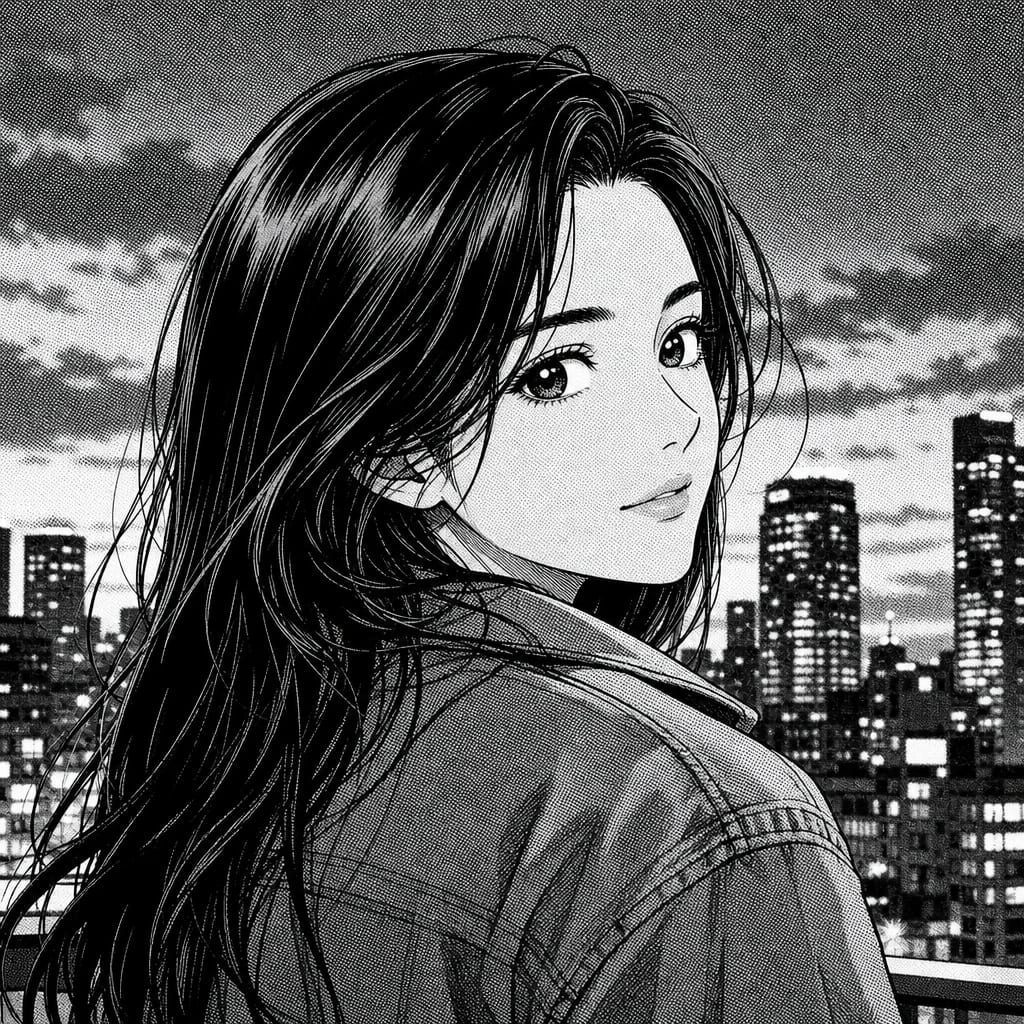
Manga art style
Black-and-white ink, with screentone — sheets of halftone dots — doing the work that colour does elsewhere. Line weight varies deliberately, heavier on outlines and shadow edges. Faces are pushed past realism for expression, and panels often break their own borders during action beats. manga style guide goes further into the visual language.
Manhwa art style
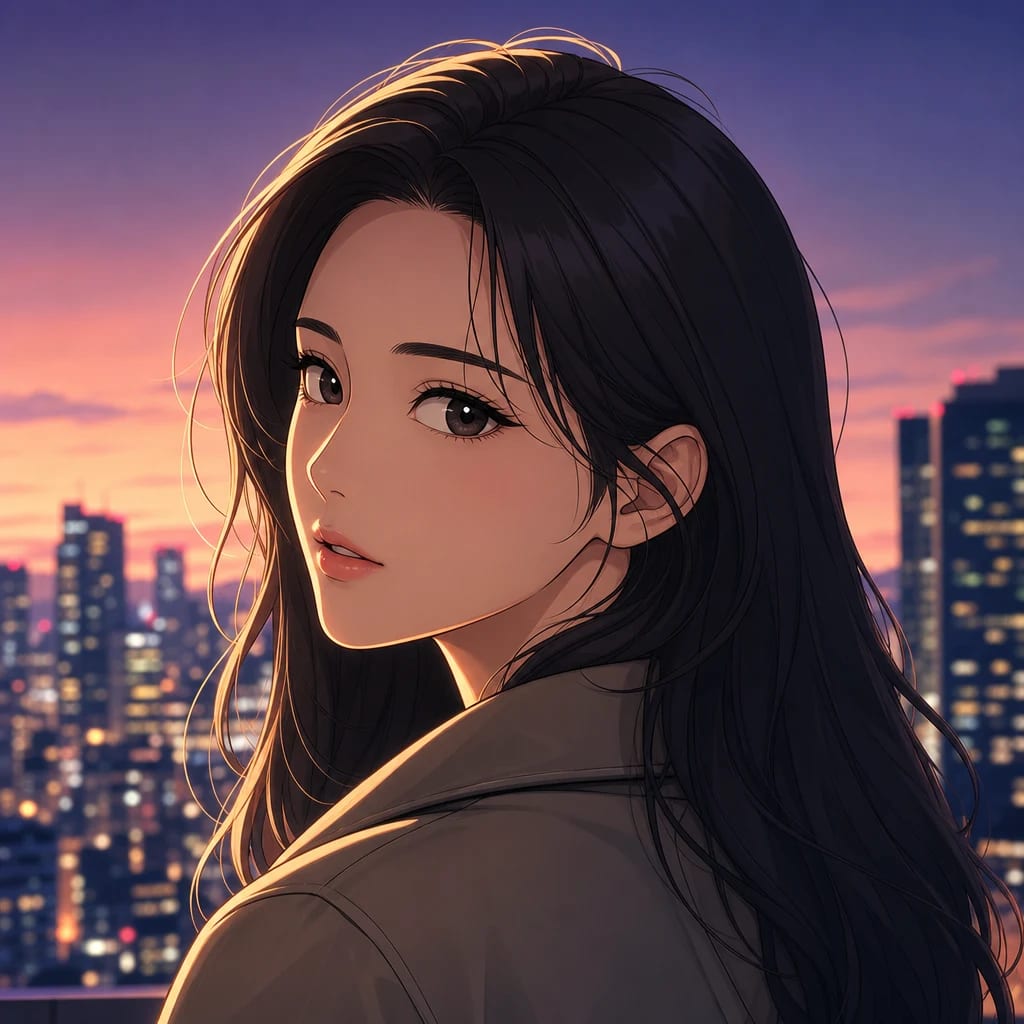
Full colour rendered digitally, with smooth airbrushed gradients rather than flat fills. Cinematic lighting is the signature — rim-light separating figures from the background, backgrounds painted with real atmospheric depth. Proportions and faces stay close to realistic, so emotion is carried by small changes of expression. manhwa style guide covers the format in more detail.
Manhua art style
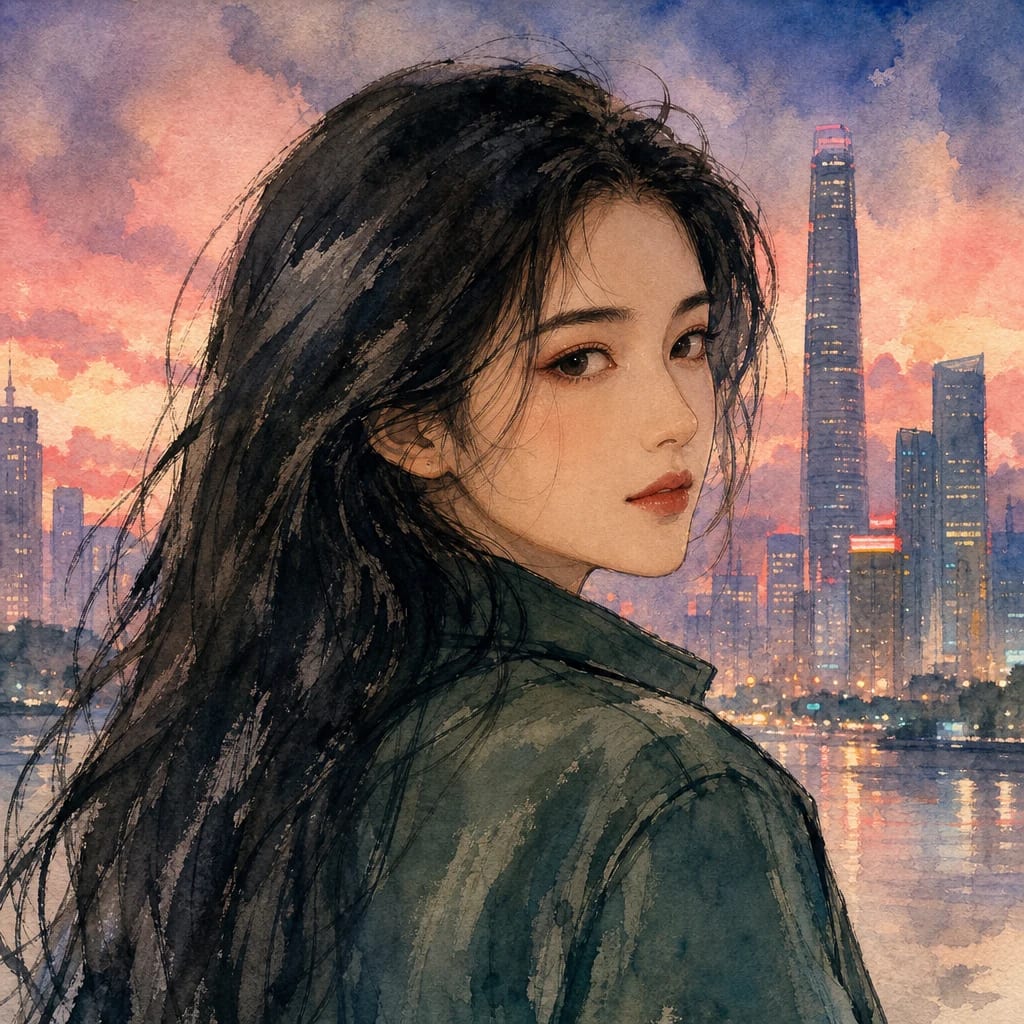
Full colour too, which is why manhwa and manhua get confused. The difference is how the colour is laid down: an ink-wash inheritance from Chinese painting, with watercolour washes bleeding softly at their edges, visible brush strokes, and distance dissolving into mist rather than resolving into detail. Cultivation and xianxia settings are common in manhua, but those are genre conventions rather than the drawing style itself. manhua style guide covers cultivation-genre conventions specifically.
Three close-ups of the same character in the same light, one per tradition, shown large enough that the surface of each medium is actually visible — the dot pattern, the gradient, the wet edge. Everything except the drawing technique is held constant.
History and origin
The three traditions have parallel but non-identical timelines.
| Era | Manga | Manhwa | Manhua |
|---|---|---|---|
| 1814 | Hokusai publishes the first Hokusai Manga sketch collections, fixing the word | — | — |
| 1920s–30s | Established as the standard term for Japanese comics | Manhwa emerges as a distinct Korean term | Zikai Manhua (1925) puts the word into modern use; Shanghai Sketch (1928) is the first major manhua magazine |
| 1950s–60s | Tezuka's Astro Boy (1952) founds modern story-driven manga | Print manhwa weeklies grow through the post-war period | Hong Kong becomes a parallel centre; the industry is disrupted on the mainland |
| 1980s–90s | Weekly magazine and tankōbon model at its peak; global export begins | Still print-first and largely black-and-white | Hong Kong wuxia manhua at its height |
| 2000s | Print-first model holds; English publishers keep right-to-left layout | Naver Webtoon (2004) and Daum launch — vertical scroll, full colour, digital-first | Re-emerges around digital publishing |
| 2010s–2020s | Digital simultaneous release via Shonen Jump and MANGA Plus | Global breakout — Solo Leveling, Tower of God; webtoon becomes the default format | Bilibili Comics and Kuaikan scale; donghua adaptations accelerate |
When was manga invented?
The word “manga” as a term for pictorial narrative was popularized by Katsushika Hokusai's Hokusai Manga in 1814, though pictorial storytelling in Japan dates back centuries earlier (choju-giga scrolls from the 12th century are sometimes cited as the earliest ancestors). Modern story-driven manga in the format we know today dates to Osamu Tezuka's post-war work, with Astro Boy (1952) as the foundational modern manga.
When did manhwa start?
Manhwa as a distinct Korean tradition emerged in the early 20th century, with the term used from the 1920s-30s. Modern Korean comics grew through the mid-20th century as print weeklies, but the format transformation that made manhwa globally recognized came with the early-2000s webtoon revolution — vertical-scroll, full-color, digital-first, published on Naver Webtoon (launched 2004) and Daum Webtoon.
When did manhua start?
Manhua as a term dates to Republic-era China in the 1920s-30s, and two dates anchor it: Feng Zikai's Zikai Manhua series in Literature Weekly (1925), which put the word into modern circulation, and Shanghai Sketch (1928), the first major manhua magazine. The Chinese comics industry was disrupted for much of the 20th century and re-emerged strongly in the 2000s alongside digital-first publishing on platforms like Bilibili Comics (comics section launched 2015) and Kuaikan Manhua.
Which is the oldest?
In modern comics form, manga is the oldest of the three with Hokusai's 1814 use of the term and Tezuka's 1952 modern-format foundation. Manhwa and manhua as distinct terms both trace to the 1920s-30s. All three national traditions have older pictorial-storytelling ancestors (choju-giga in Japan, various Chinese scroll traditions) but as continuously published modern comic forms, manga has the longest lineage.
Reference: Britannica, “Manga”; Wikipedia, “Manhua” for the Zikai Manhua (1925) and Shanghai Sketch (1928) dates; John A. Lent and Xu Ying, Comics Art in China (University Press of Mississippi, 2017, ISBN 978-1-4968-1174-5). Verified .
Reading direction, color, and format
The practical questions readers ask first.
Which way do you read manga?
Japanese manga reads right-to-left, top-to-bottom. Pages flip from left to right (opposite of English books). Panels within a page flow right-to-left. Speech bubbles read right-to-left inside a panel. Translated English editions from publishers like Viz Media (since 2002) preserve this original reading direction. Earlier English translations (Naruto's first English release, for instance) sometimes flipped the pages to read left-to-right — this practice has largely stopped.
Which way do you read manhwa?
Korean manhwa reads left-to-right, matching Western conventions. Modern webtoon-format manhwa reads top-to-bottom as a vertical scroll — you scroll through one long file rather than turning pages. This mobile-first format is why manhwa dominates modern mobile-comic consumption.
Which way do you read manhua?
Most modern Chinese manhua reads left-to-right, matching mainland-China print conventions and Western reading direction. Some traditional-format manhua from Taiwan or Hong Kong uses right-to-left, and some digital manhua uses vertical scroll like webtoons. Check the specific publication.
Start top-right. Pages turn the opposite way to an English book.
Start top-left, the same as any Western comic.
No page turns. Full-width bands stacked top to bottom.
Why is manga black and white?
Print economics. Japanese manga has traditionally been published in cheap weekly magazines printed on newsprint paper where color printing would double or triple the cost. Weekly Shonen Jump, Weekly Shonen Magazine, and similar weeklies have run monochrome since the 1960s. Chapter covers and promotional inserts get color; the story pages stay black-and-white. Modern digital manga sometimes ships in color but the print tradition holds.
Are manhwa in color?
Nearly all modern manhwa is full color. The webtoon era shifted the medium to digital-first publishing where color adds no printing cost, so creators use it freely. Older Korean print comics from the 1950s-1990s were mostly monochrome, but almost nothing being published today is black-and-white. If you're reading a manhwa published after 2005, expect color.
Manhwa vs webtoon — is it the same thing?
Mostly no, though the overlap is significant. Manhwa is an origin label (Korean comic). Webtoon is a format label (vertical-scroll comic designed for mobile). The two overlap because the vertical-scroll webtoon format originated in Korea in the early 2000s.
Most modern manhwa ARE webtoons — Korean creators publish in vertical-scroll format on Naver Webtoon and KakaoPage. But a French creator publishing on WEBTOON Canvas makes a webtoon, not a manhwa. And older Korean print comics (pre-2000s) are manhwa but not webtoons.
For a full guide to making one, see our how to make a webtoon guide.
Manga vs doujinshi — is doujinshi a type of manga?
Doujinshi (同人誌) is self-published Japanese work — sometimes original stories, often derivative or fan work based on existing manga, anime, or games. Doujinshi and manga overlap because most doujinshi is drawn in manga style, but they're not the same category. Manga refers to commercially published Japanese comics (via Shueisha, Kodansha, Shogakukan, and other publishers). Doujinshi is fan-published or self-published work — traditionally sold at Comiket (Comic Market) in Tokyo, held twice a year.
Many famous mangaka started or continued doing doujinshi alongside their commercial work. Some doujinshi circles have transitioned to commercial serialization. But when readers say “manga,” they usually mean the commercial magazine- and-tankōbon product, not the self-published Comiket tradition.
Shounen, shoujo, seinen, josei — the manga demographic labels
These four Japanese words describe the intended audience of a manga, not its genre. A shounen manga is aimed at teen boys, a josei manga at adult women — but the actual genre (romance, action, horror, slice-of-life) is separate. Confusing demographic with genre is the most common mistake English- speaking readers make when discussing manga categories.
| Demographic | Target audience | Example series |
|---|---|---|
| Shounen | Teen boys (10-18) | Naruto, One Piece, Demon Slayer, My Hero Academia |
| Shoujo | Teen girls (10-18) | Fruits Basket, Sailor Moon, Ouran High School Host Club |
| Seinen | Adult men (18+) | Berserk, Vinland Saga, Vagabond, Monster |
| Josei | Adult women (18+) | Nana, Chihayafuru, Princess Jellyfish |
Korean manhwa doesn't use these exact demographic labels — similar tiers exist (action-heavy webtoons aimed at male teens fill the shounen-equivalent role, romance webtoons the josei-equivalent), but the terminology is Japanese. Chinese manhua doesn't use them either, though popular manhua genres (xianxia, cultivation) skew toward adult male readership.
A deeper guide covering each demographic in detail — including how they interact with genre labels like isekai, shoujo-ai, or slice-of-life — is planned as a standalone reference. In the meantime, remember: shounen ≠ action, shoujo ≠ romance. They're audience labels, not genre labels.
Demographic is also not the same thing as an age rating. A tier tells you who a series was written for; the rating printed on an English edition tells you what is actually in it. Viz Media marks every volume All Ages, T for Teen (13+), T+ for Older Teen (16+), or M for Mature (18+) — so a shounen title aimed at teenage boys can still carry a T+ for violence. Check the rating on the book, not the demographic.
Rating tiers per Viz Media, “Our Ratings”. Publishers set these themselves — they are guidance, not an industry standard. Verified .
Frequently asked questions
- Is Solo Leveling manga or manhwa?
- Solo Leveling is a manhwa. Written by Chugong, it was originally published as a Korean web novel starting in 2016, then adapted into a webtoon (manhwa) illustrated by Jang Sung-rak (DUBU) on KakaoPage from 2018. The 2024 animated adaptation is anime made in Japan, but the source material is Korean manhwa. Common confusion because the anime is Japanese-produced.
- Is Tower of God manga or manhwa?
- Tower of God is a manhwa. Created by SIU (Lee Jong-hui) and published on Naver Webtoon starting in 2010, it's one of the longest-running and most widely-read Korean webtoons. The Crunchyroll anime adaptation started in 2020 but the original source is Korean webtoon, not Japanese manga.
- Is Windbreaker manga or manhwa?
- There are two different works with this name. The Korean manhwa Windbreaker by Jo Yongseok (2013–2022) is a webtoon about competitive cycling. The Japanese manga Wind Breaker (WIND BREAKER, 2021+) by Satoru Nii is about high-school delinquents. Both got anime adaptations, which multiplies the confusion. Search results usually mix them.
- Which is better, manga or manhwa?
- Neither is objectively better — they're different media traditions with different strengths. Manga has 100+ years of history, more genre variety, and larger global fanbase. Manhwa is more accessible visually (full color, mobile-scroll format), publishes faster, and dominates recent adaptations. Pick based on what you want to read, not which is 'better.' Most readers who try both end up reading both.
- Is manhwa just Korean manga?
- Not quite. Manhwa and manga are separate national traditions. Both words come from the same two Chinese characters (漫畫 / 漫画), but manga refers specifically to Japanese comics and manhwa specifically to Korean comics. Calling manhwa 'Korean manga' is common casual usage — and often what people mean — but not technically accurate. They're parallel forms, not one being a subset of the other.
- What is American manga called?
- American-made comics in manga style are usually called OEL manga (Original English-Language manga) or American manga. The term covers work by non-Japanese creators drawing in the manga visual tradition — Tokyopop published a large OEL catalog in the 2000s, and modern creators publish OEL work on platforms like WEBTOON Canvas and Tapas. It's manga-style, but not manga in the strict Japanese-origin sense.
- What's the Big 3 of manhwa?
- The Big 3 of manhwa is commonly cited as Solo Leveling, Tower of God, and Noblesse — three long-running Korean webtoons that dominated global manhwa readership through the 2010s and 2020s. Some readers substitute The Beginning After the End for Noblesse, especially post-2023. Unlike the shonen manga Big 3 (One Piece, Naruto, Bleach), the manhwa Big 3 isn't an official designation — it's community consensus with real regional variance.
- Is Naruto manga or manhwa?
- Naruto is a manga. Written and illustrated by Masashi Kishimoto, it was serialized in Japan's Weekly Shonen Jump from 1999 to 2014, published by Shueisha. The anime adaptation is Japanese, the manga is Japanese, everything about it is Japanese. If you've seen it called manhwa, that's a mistake — manhwa is the Korean word for comic, and Naruto isn't Korean.
- Is Berserk a manga?
- Yes, Berserk is a Japanese seinen manga written and illustrated by Kentaro Miura, serialized in Young Animal magazine from 1989 until Miura's death in 2021. It has continued under Kouji Mori and Miura's studio Gaga since 2022. Seinen means it's aimed at adult readers — Berserk's dark fantasy, violence, and mature themes are why it sits in the seinen category rather than shonen.
- Why do you read manga right to left?
- Manga reads right-to-left because Japanese text traditionally reads right-to-left in vertical columns. Panels flow the same direction as text, and English translations preserve the original layout so the art doesn't get mirrored. Older English releases sometimes flipped pages left-to-right — Naruto's first English printing did this — but modern publishers like Viz Media keep the original right-to-left direction. See our reading-direction section above for the practical how-to.
- What is a raw manga, and what is a scanlation?
- Raw manga is untranslated manga in its original Japanese, sold or shared in scan form without any English text. A scanlation is a fan-translation of a raw manga — scanners scan the raw pages, translators translate the Japanese, and editors typeset the English onto the artwork. Scanlations exist in legal grey territory: they're unauthorized derivative works, though many manga readers relied on them for years before official simultaneous English releases became common on Viz's Shonen Jump app and MANGA Plus.
- Can manga be in color?
- Yes, though it's rare. Most manga is printed black-and-white because Japanese manga magazines used cheap newsprint that couldn't afford color. Chapter covers, promotional images, and specific 'color pages' inside magazines are exceptions. Some modern digital-first manga is fully colored. But the default expectation for manga is monochrome.
- Where does the word manga come from?
- Manga (漫画) combines two Chinese-derived characters: 漫 (man, meaning 'whimsical' or 'impromptu') and 画 (ga, meaning 'pictures'). The compound is often attributed to Katsushika Hokusai, who used it as the title of his sketch collections (Hokusai Manga, published from 1814). The word became the standard term for Japanese comics in the 20th century.
- What's the difference between Japanese manga and Korean manhwa?
- Manga is Japanese; manhwa is Korean. Manga is usually black-and-white and reads right-to-left, published traditionally in weekly magazines and collected into tankōbon volumes. Manhwa is usually full color and reads left-to-right (or vertically as a webtoon), published on digital platforms like Naver Webtoon and KakaoPage. Different countries, different formats, different reading directions.
- What are the shonen and seinen equivalents in manhwa?
- Korean manhwa doesn't use the exact same demographic labels as Japanese manga, but similar categories exist. Action-heavy manhwa aimed at male teens (like Tower of God, Solo Leveling) fill the shonen-equivalent role. More mature, complex narratives (like Bastard, Sweet Home) fill the seinen role. Josei-equivalent romance manhwa is enormous on Korean platforms.
- Can I read manhwa in Japanese?
- Yes — many popular manhwa are officially translated into Japanese. Solo Leveling, Tower of God, and other big webtoons have Japanese editions published on platforms like LINE Manga. Direct Korean-to-Japanese translation is common because both audiences overlap heavily. English translations are usually available through Tapas, WEBTOON, or KakaoPage's international apps.
- Do manga and manhwa have the same audience?
- There's significant overlap but not identical. Manga has the largest global comic fanbase built over decades. Manhwa's audience skyrocketed in the late 2010s and 2020s with webtoon adaptations reaching Western readers via WEBTOON and Tapas. Many readers now consume both. Manhwa skews slightly younger and more mobile-first; manga skews toward established print-reading habits.
- Is manga kid appropriate?
- Some of it, and the rating on the back cover tells you which. Manga is a medium, not a genre — it spans everything from Yotsuba&! to Berserk. English publishers rate every volume: Viz Media uses All Ages, T for Teen (13+), T+ for Older Teen (16+), and M for Mature (18+), printed on the back of each book. Check the rating rather than the art style, because a cute-looking cover is no guarantee of a gentle story.
- Is manga R rated?
- Manga does not use film ratings, so there is no R. The nearest equivalent in Viz Media's system is M for Mature, meaning 18+, which flags things like intense violence, gore, explicit language, or sexual content. Below that sit T+ (Older Teen, 16+), T (Teen, 13+), and All Ages. A specific series is rated; the medium as a whole is not.
- Is manga appropriate for 13 year olds?
- Plenty of it is — that is exactly what the T for Teen rating means in Viz Media's system, roughly the manga equivalent of a PG-13 film. Titles like My Hero Academia and Demon Slayer sit at or near that tier. What a 13-year-old should skip is anything marked T+ (16+) or M (18+). Ratings are the publisher's own judgement rather than an industry standard, so they are guidance, not a guarantee.
- What is manga for kids called?
- Kodomomuke, usually shortened to kodomo — Japanese for 'aimed at children'. It is the demographic tier below shounen and shoujo, covering series written for elementary-age readers: Doraemon, Pokemon Adventures, Hamtaro. English publishers usually label these All Ages rather than using the Japanese term. Kodomo sits below the four tiers set out in the demographic labels section above — shounen, shoujo, seinen, and josei.
- What is female manga called?
- It depends which readers you mean. Manga written for teenage girls is shoujo (Fruits Basket, Sailor Moon); manga written for adult women is josei (Nana, Chihayafuru). Both are demographic labels describing the intended audience, not the genre — a shoujo series can be horror, and a josei series can be sports. The demographic labels section above sets all four tiers side by side.
Go deeper on any of these
For the dedicated Chinese-comics deep-dive — cultivation genre, manhua vs donghua, and honest English reading access — what is a manhua.
For the full make-a-manga guide — panel templates, page sizes, drawing anatomy, best apps, publishing — how to make a manga.
For the full manhwa/webtoon creator guide — canvas specs, publishing platforms, monetization — how to make a webtoon.
For the manga style visual deep-dive (screentones, panel flow, right-to-left composition) — manga style guide.
Ready to make one yourself? Our how to make a comic guide covers the full workflow across formats — comic strip, comic book, graphic novel, plus manga and manhwa variants — from story premise to publishing.
For the manhwa style visual deep-dive (cinematic color, vertical scroll composition) — manhwa style guide.
For the manhua style visual deep-dive (cultivation aesthetic, xianxia visual language) — manhua style guide.
For the seinen sub-genre (mature manga: Berserk, Vagabond, Vinland Saga) — seinen style guide.
To make your own manga with AI — AI manga generator.
To turn your photo into anime (color) or manga (B&W) — photo to anime or photo to manga. Same reference-locking workflow, different render style.
For blank manga panel templates (or Western comic templates — 3/4/6/9-panel, splash, sizing standards) — comic book templates.
For the technical foundation that makes multi-panel comics possible in the first place — locked character reference across every panel — see our consistent character AI guide.
Panduan ini juga tersedia dalam Bahasa Indonesia: Cara membuat komik — panduan lengkap komik, manga, dan webtoon untuk pemula.
Three names, three traditions,
one shared root.
If you came here to settle a debate, screenshot the comparison table. If you came here to start reading something new, all three are worth your time.
By the TaleAtelier Editorial Team, operated by AI Solution Labs — last reviewed . Etymology, pronunciation, and history verified against Britannica, Merriam-Webster, Wiktionary, and the printed sources cited in each section.