How to become a webtoon creator.
The 2026 complete guide — WEBTOON CANVAS canvas specs, publishing pathway (CANVAS vs Originals), real Ad Revenue Program pay numbers, and the honest career picture. Independent editorial, no self-promotion above the fold.
Last reviewed . WEBTOON platform specs and Ad Revenue Program eligibility rules verified against webtoons.com same day. Creator-reported income ranges cited as such — not claimed as platform-published data.
By the TaleAtelier Editorial Team
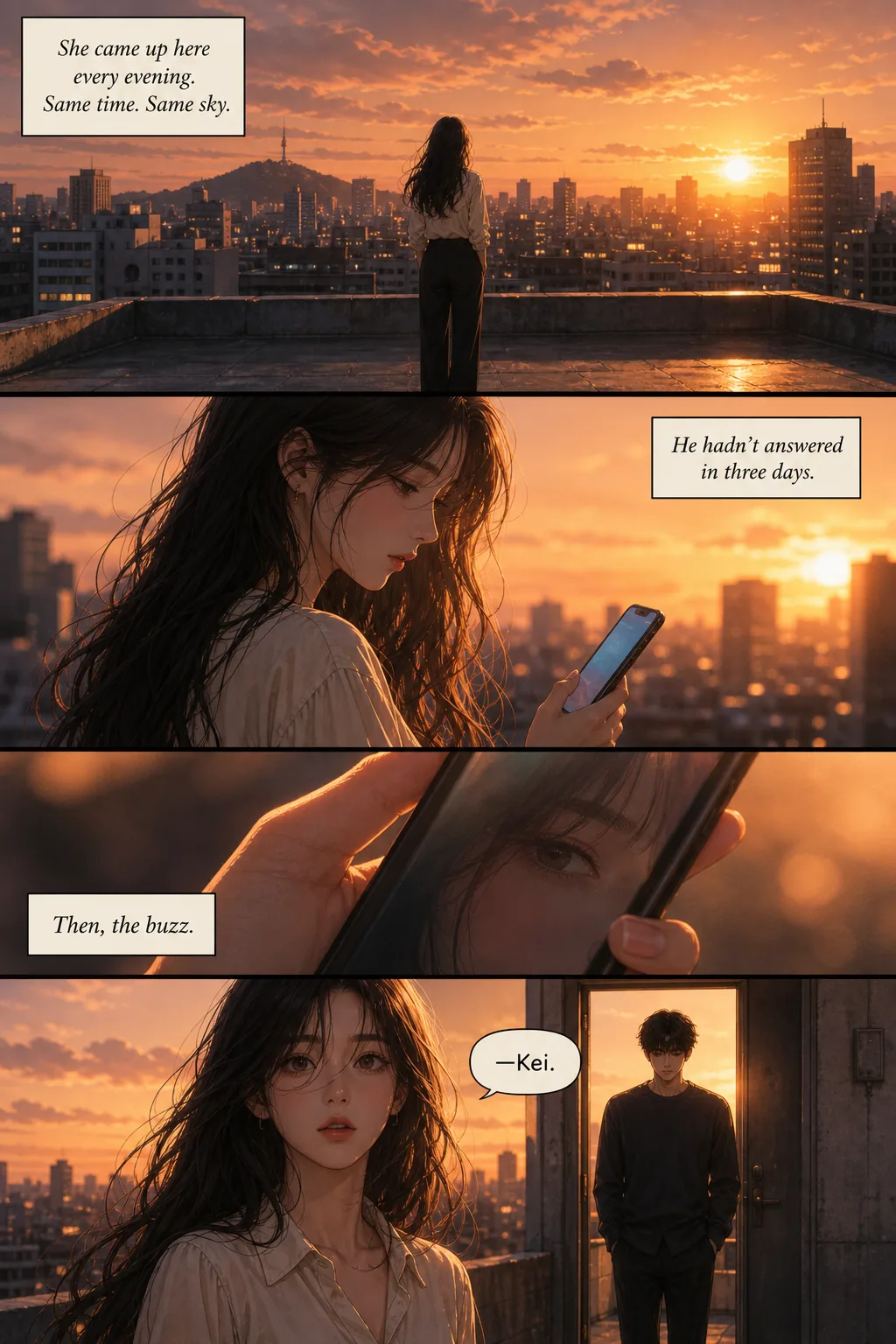
Becoming a webtoon creator means publishing vertical-scroll episodes on WEBTOON CANVAS — images 800 px wide and up to 1,280 px tall, a hundred of them per episode. CANVAS is open to anyone and carries no exclusivity; Originals is invite-only and exclusive. Ad revenue starts at 1,000 subscribers and 40,000 monthly views, at half of net revenue, with no published per-view rate.
What is a webtoon creator?
A webtoon creator publishes vertical-scroll digital comics on WEBTOON (webtoons.com) or comparable platforms (Tapas, Naver, Webtoon.xyz). The format is mobile-first: episodes are single vertical scrolls stacked from panel to panel, read on phones. Different from traditional Western comics (page-based) and manga (page-based, right-to-left).
Two tiers exist inside WEBTOON: CANVAS is open self-publishing — anyone with an account can upload, no editorial review and no exclusivity — the same series can run on Tapas or anywhere else at the same time. Originals is invite-only with a WEBTOON contract, editorial support, and higher pay per episode. Most creators start CANVAS and hope to earn an Originals invite via traction.
“Webtoon creator” usually covers the full job (writer + artist + letterer + uploader), though collaborations (writer-only creators partnered with artists) are common. AI-generation tools now let script-only creators produce visual episodes without drawing.
WEBTOON CANVAS specs — dimensions, panel sizes, file format
The technical anchor. Get these numbers wrong and your episode won't upload or will crop unexpectedly. Verified against WEBTOON's official Creators 101 handbook.
| Spec | Value | Notes |
|---|---|---|
| Image width | 800 px | Anything wider is accepted but silently sliced and re-encoded |
| Image height | 1,280 px | Per image — a full episode stacks many of them |
| Images per episode | Up to 100 | Stacked into one continuous vertical scroll |
| File size | 2 MB per image · 20 MB per episode | Both limits apply |
| File formats | JPG, JPEG or PNG | No other format is listed in WEBTOON's handbook |
| Colour mode | RGB | Screen only, never CMYK. WEBTOON specifies no DPI — it is print metadata and does nothing to a screen image |
| Series thumbnail | 1080×1080 (square) · 1080×1920 (vertical) | Under 500 KB and 700 KB respectively |
| Episode thumbnail | 202×142 px recommended | Under 500 KB. Older 160×151 uploads are displayed at the new size |
Specs verified September 2026 against WEBTOON’s own Creator’s Resource Handbook and its Before You Publish Checklist, which state these limits in identical words, plus the CANVAS help centre for thumbnails. Tag and title-length limits change with platform updates and are not listed here — check the help centre before finalising a series page.
How to create a webtoon — 7 steps
CANVAS signup through first episode upload. Assumes you have a drawing tool (Clip Studio Paint, Procreate, Photoshop, Krita) or an AI generation workflow.
- 01
Sign up for WEBTOON CANVAS
Create a free WEBTOON account at webtoons.com/en/creators-signup, then enable CANVAS creator mode. CANVAS is the self-publishing tier — no invite needed, no editorial review. Anyone with an account can publish.
- 02
Plan your episode structure
Most CANVAS episodes run 30-50 stacked panels totalling 4,000-15,000 px tall. First episode should hook fast — the reader has 3 scrolls to decide whether to continue. Plot a rough beat map before drawing so pacing works with the vertical-scroll rhythm.
- 03
Set your canvas dimensions
800 px wide, RGB. Height varies by episode; individual upload sections cap at 1,280 px tall and ~2 MB. In Clip Studio Paint pick the built-in webtoon template; in Procreate or Photoshop set canvas manually to 800 px wide.
- 04
Draft panels vertically with gutters
Panels flow top-to-bottom with vertical gutters (whitespace) controlling pacing. Wider gutters = slower beats. Full-width panels for atmosphere; stacked half-panels for dialogue exchange. Break natural pacing beats between upload sections.
- 05
Letter dialogue in speech balloons
Text should be readable on mobile — most webtoon reading happens on phones. Minimum 32 px font size for body dialogue, larger for shouting or emphasis. Speech balloons follow panel order top-to-bottom. Sound effects positioned freely.
- 06
Export at spec
Export as PNG for lineart-heavy work, JPG for full-color painterly work. Split the full episode height into upload sections capped at 1,280 px tall. Name files sequentially (ep01_01.png, ep01_02.png) so WEBTOON stacks them in order.
- 07
Upload via CANVAS dashboard
In your CANVAS creator dashboard, create a new episode, drag your section files in order, add title, an episode thumbnail (202×142 px recommended), description and content tags. Publish immediately or schedule. First episode goes live within minutes.
How to publish on WEBTOON — CANVAS vs Originals
Two tiers, two different playbooks. Most first-time creators publish CANVAS immediately. Originals is a longer path with higher pay.
| Attribute | CANVAS (self-publish) | Originals (invite) |
|---|---|---|
| Entry | Open — anyone with an account | Invite-only via Featured, contest wins, or direct outreach |
| Editorial review | None — you publish immediately | Yes — WEBTOON editorial oversight |
| Contract | No signed contract, but the CANVAS Terms grant WEBTOON a nonexclusive, royalty-free, worldwide, sublicensable licence for as long as the work is published | Master Creator Agreement — exclusive worldwide digital rights for 3 years after the final episode, plus exclusive options on print and audiovisual |
| Exclusivity | None — nothing in the Terms restricts cross-posting | Exclusive for the contract term; includes a non-disparagement clause |
| Payment | 50% of net ad revenue, once a series passes 1,000 subscribers and 40,000 monthly views; 70% of Super Like tips | Per-episode rate plus revenue share — WEBTOON publishes no rate card |
| Discoverability | Reader search + trending + genre browse | Featured on homepage, push notifications, front-page slots |
| Typical earnings | No published rate. The few creators who have shared figures reported roughly $0.28–$0.50 per 1,000 views in 2022–23 | No published rate. WEBTOON's 2024 SEC filing put the FY2023 average across all professional creators at $48,000 a year |
Contract terms verified September 2026 against the CANVAS Terms of Use (themselves last updated January 2026). Pay figures verified September 2026 against WEBTOON Entertainment’s SEC filings. The FY2025 annual report dropped per-creator earnings disclosure, so the 2023 figures are the most recent official data and will not be refreshed by WEBTOON.
Getting from CANVAS to Originals: WEBTOON invites Originals creators via consistent CANVAS traction, contest wins (Short Story Contest, Genre-specific contests), or direct editorial outreach. Typical path per public creator reports: 6-24 months of weekly CANVAS uploads building a subscriber base, then either an invite arrives or you keep going on CANVAS with Ad Revenue.
Getting featured on CANVAS: Featured slots are editorially curated. Strong first-3-episode hook, consistent weekly schedule, and genre relevance to current WEBTOON promotional focus all raise your odds. Featured status often precedes an Originals invite.
Webtoon career — real monetization numbers (2026)
Honest picture. Numbers cited here are creator-reported ranges from public interviews and Reddit disclosures — WEBTOON does not publish official per-view or per-episode rates.
Ad Revenue Program (CANVAS tier)
A CANVAS series becomes eligible for ad revenue once it passes 1,000 subscribers and 40,000 monthly page views; reward ads need 100,000. WEBTOON shares 50% of net ad revenue — net meaning after it deducts its operating costs — and pays out at $25 through PayPal or $100 through Patreon. The Terms state plainly that there is no guarantee you will be paid anything.
WEBTOON publishes no per-view rate, so nobody can tell you what a view is worth. The few creators who have published their own numbers reported roughly $0.28–$0.50 per 1,000 views in 2022–23 — one of them $824 in total from 2.2 million views over two years. Treat CANVAS ad revenue as supplementary income; on the published evidence it is not a wage.
WEBTOON Originals (contract tier)
Originals creators receive a per-episode rate plus revenue share. WEBTOON publishes no rate card, and the one per-episode figure it has ever printed — $1,000 — appears in a notice as a worked example of how a minimum guarantee is calculated, not as what anyone is paid.
The only audited figures come from WEBTOON's 2024 SEC filing, covering 2023: professional creators earned an average of $48,000 that year, the top 100 averaged $1 million, and 483 creators earned at least $100,000 — out of roughly 13,000 professionals. Read that as a distribution rather than a range: fewer than four in a hundred cleared six figures, and the average is pulled upward by a small top tier. WEBTOON stopped disclosing this in its FY2025 report, so 2023 remains the most recent official picture.
- Top 100 — averaged $1M
- 100
- Earned $100k or more
- 483
- All professional creators
- 13,000
Roughly 13,000 professional creators, against 24 million people who had uploaded anything. “Professional” already excludes almost every CANVAS creator.
Contract specifics vary widely — WEBTOON typically takes a rights share on Originals-tier work. Read any Originals contract carefully before signing; consulting an entertainment lawyer is standard practice for multi-year contracts.
Patreon and external monetization
Many CANVAS creators supplement Ad Revenue via Patreon — offering early access, character sheets, or bonus content to paying subscribers. Patreon integrates loosely with WEBTOON (external link in creator profile); dedicated fan-funding platforms like Ko-fi and Buy Me a Coffee are also common. Typical Patreon revenue for mid-tier CANVAS creators: $100–$2,000/mo per creator reports.
Side hustle vs full-time math
CANVAS Ad Revenue + Patreon typically works as a side hustle earning $20–$500/mo for most creators. Full-time income usually requires either (a) breakout CANVAS success driving millions of monthly views, or (b) an Originals contract. A realistic first-year target for a new CANVAS creator: 5,000-20,000 subscribers, $10–$50/mo Ad Revenue, $50–$300/mo Patreon.
How to become a webtoon artist
“Webtoon creator” and “webtoon artist” overlap but aren't identical. A creator can be a script-only writer partnered with an artist, or an AI-generation user with no drawing skill. A webtoon artist specifically draws — panel-by-panel composition, lineart, coloring, lettering.
Path most commonly cited by working webtoon artists: (1) build fundamentals (anatomy, perspective, expression), (2) digital tool proficiency in Clip Studio Paint or Procreate, (3) vertical-scroll composition practice (different rhythm from page-based comics), (4) portfolio of short episodes posted to CANVAS or personal site, (5) either self-publish on CANVAS or apply to studios hiring webtoon artists.
Salary as a hired artist: Studios hiring webtoon artists as contractors reportedly pay $200–$800 per episode depending on style complexity and turnaround (public rate discussions on r/webtoon). Full-time studio positions are rare but exist at larger WEBTOON Originals studios in Korea and the US.
How to draw a webtoon and write the script
Webtoon drawing style differs from page-based comics in three ways: (1) vertical composition — panels flow top-to-bottom, so eye lines and momentum arrows point down, not left-to-right; (2) gutter spacing controls pacing — wider gutters = slower beats, tighter stacks = faster action; (3) mobile readability — linework and text must remain legible at phone screen size.
Clip Studio Paint has the deepest webtoon-focused tutorial library (built-in webtoon templates, dedicated vertical-scroll preview mode). Procreate suits painterly styles; Krita is the free open-source option. YouTube tutorials from working webtoon artists cover style-specific drawing techniques in more depth than any single guide.
Webtoon script format: standard format includes panel-by-panel description + dialogue + SFX cues + scroll break markers. No industry standard software — most creators use Google Docs, Notion, or scriptwriting tools like Final Draft (adapted). Format example: Panel 1 [full-width, atmospheric]: Rain on empty street. CAPTION: “It started that Tuesday.”
WEBTOON creator community
WEBTOON Discord: WEBTOON runs official Discord servers for CANVAS creators — regional and language-specific. Invite links appear in the creator dashboard and are shared through Creator Summit events. Unofficial Discord servers run by community moderators cover specific genres and creator experience levels.
Reddit: r/webtoons and r/WebtoonsCreators are the main hubs — CANVAS creator AMAs, income disclosures, feedback threads on WIP episodes. The creator-specific subreddit skews toward practical questions (contract terms, upload issues, monetization math).
Creator Summit: WEBTOON hosts occasional online creator summit events with tutorials, monetization sessions, and Q&A with Originals creators. Recordings live on WEBTOON's YouTube channel and Creators 101 handbook.
The AI-assisted route
There are two honest routes into a webtoon, and the right one depends on what you are short of. Draw it yourself if the art is the point, if you want a style nobody else has, or if you intend to enter WEBTOON's contests — they disqualify generative AI outright. The cost is time: a weekly episode is a part-time job on its own, which is what the hours data further up this page describes. Write it and let AI draw if the story is the point and drawing is the barrier. The cost there is control — you direct rather than draw, and the platform questions below are yours to weigh.
AI generation is a viable path for creators without drawing skills, but check the platform rules before you rely on it, because they differ sharply and most guides get this wrong. WEBTOON is silent: as of September 2026, neither the CANVAS Terms of Use nor the Community Policy contains any clause about AI-generated or AI-assisted artwork, and there is no AI disclosure field in the uploader. Silence is not permission — WEBTOON bans generative AI outright in its official contests, whose rules require entries “not be created using any form of generative artificial intelligence”. It is also worth knowing that the CANVAS Terms require you to warrant you hold all rights to what you upload, and US copyright does not protect wholly machine-generated images — a tension nobody has tested publicly. Elsewhere the rules are explicit: Tapas prohibits AI-generated content outright, and GlobalComix banned fully AI-generated art in March 2026 while still allowing AI as one tool in a human-led workflow.
For fully AI-generated webtoon episodes — vertical-scroll format handled automatically, character consistency across panels, dialogue placement — TaleAtelier's AI webtoon maker handles the pipeline end-to-end. Hybrid workflows (AI generates panels, artist refines) are also common with tools like Clip Studio Paint's Auto Actions.
For the how-to (creation) companion to this page — the 10-step walkthrough from idea through first upload — see how to make a webtoon.
Frequently asked questions
- How much do WEBTOON creators make?
- WEBTOON publishes no per-view rate and no Originals rate card, so any single number you see quoted is someone's estimate. What WEBTOON has disclosed, in its 2024 SEC filing covering 2023: professional creators earned an average of $48,000 that year, the top 100 averaged $1 million, and 483 creators earned at least $100,000 — out of roughly 13,000 professional creators. That distribution matters more than the average: fewer than 4 in 100 professional creators cleared $100,000. WEBTOON's FY2025 annual report dropped creator-earnings disclosure entirely, so 2023 is the most recent official data. For CANVAS specifically, the Terms set the split at 50% of net ad revenue; the handful of creators who have published their own figures reported roughly $0.28–$0.50 per 1,000 views in 2022–23, with one reporting $824 in total from 2.2 million views across two years. Those are individual and unaudited.
- Is being a webtoon creator a full-time job?
- For most CANVAS creators, no. Ad revenue only begins at 1,000 subscribers and 40,000 monthly page views, and the reported per-view rates make it supplementary income rather than a wage. Full-time creators exist — the SEC figures above show 483 people earning six figures in 2023 — but they are a small fraction of roughly 13,000 professionals, who are themselves a fraction of the millions who upload. The job is also demanding where it is full-time: a 2024 study of Korean webtoon writers in Safety and Health at Work found an average working week of 57.2 hours and a high prevalence of depressive symptoms, and a 2021 KOSHA survey found 17% sometimes working 14-hour days. That is the Korean studio system rather than an English CANVAS hobbyist's position, but it is the clearest published picture of the profession at full intensity.
- Do you need to draw to make a webtoon?
- Traditionally yes — CANVAS submission expects visual episodes. AI-generation tools now let script writers produce webtoon episodes without drawing skills; TaleAtelier's AI webtoon maker handles vertical-scroll layout automatically. WEBTOON's stance as of March 26, 2026 is no platform-wide ban on AI-generated content, though disclosure practices vary. Non-drawing creator paths: scriptwriter + artist collaboration, AI generation, or hiring an artist per episode.
- How long is a webtoon episode?
- Typical episode runs 30-50 stacked panels totalling 4,000-15,000 pixels tall (about 5-8 minutes reading time on mobile). Shorter episodes (2,000-4,000 px) work for slice-of-life or gag strips; longer episodes (15,000+ px) suit action-heavy or complex scenes. Consistency of length matters more than exact count — readers expect the same reading time per episode.
- Do you own your CANVAS webtoon?
- Mostly, but the CANVAS Terms are less reassuring than the marketing. WEBTOON's press material says creators keep full ownership; the Terms of Use themselves never say so. What they do say is that you grant WEBTOON a nonexclusive, royalty-free, worldwide, transferable and sublicensable licence for as long as your work is published there, covering display, distribution and monetisation. Two real limits are written in: WEBTOON will not sell your comic to an unaffiliated third party, and its right to modify or make derivative works is confined to marketing and promotion. Nothing restricts cross-posting, so you can run the same series on Tapas or your own site at the same time. If you delete your series the licence ends for new uses, but WEBTOON is not obliged to pull down promotional uses already made, and the Terms say you cannot request their removal. Originals is a different agreement entirely — the contest rules describe exclusive worldwide digital rights for three years after the final episode, plus exclusive options on print and audiovisual. Have any Originals contract reviewed by someone who reads contracts for a living.
- Can you publish a webtoon on multiple platforms?
- CANVAS: yes — you can cross-post to Tapas, Naver, Webtoon.xyz, or your own site simultaneously. Originals: usually exclusive to WEBTOON per contract terms. Many creators start on CANVAS, cross-post to Tapas or Patreon for backup audience, then move exclusive when signing Originals.
- Is CANVAS the same as WEBTOON Originals?
- No. CANVAS is open self-publishing — no invite, no contract, no editorial. Originals is invite-only with a WEBTOON contract, editorial support, and higher pay. Both live on the same webtoons.com platform, but CANVAS is the amateur/indie tier and Originals is the professional tier. Most creators start CANVAS and hope to earn an Originals invite via viral traction.
- How do you get featured on WEBTOON?
- CANVAS Featured slots are curated by WEBTOON editorial from CANVAS submissions. Path most commonly cited: consistent weekly upload schedule + strong hook in first 3 episodes + genre relevance to what WEBTOON is featuring that month. Contest wins (Short Story Contest, Genre-specific contests) also route to Featured status and often to Originals invites.
- What software do webtoon creators use?
- Clip Studio Paint EX is industry standard — ships with built-in webtoon templates and vertical-scroll preview mode. Procreate (iPad) is popular for painterly styles. Photoshop and Krita also work with manual canvas setup. For AI-generated webtoons, TaleAtelier's AI webtoon maker handles the vertical-scroll format directly without needing external drawing software. For a broader comparison across all AI-webtoon options in 2026, see our best AI webtoon makers guide.
- How do I upload to WEBTOON CANVAS?
- Log into webtoons.com, open your CANVAS creator dashboard, select your series (or create new), click 'Add Episode', drag your image files in order (each ≤1,280 px tall, ≤2 MB), add title, an episode thumbnail (202×142 px recommended), description and tags, then publish or schedule. First episode goes live within minutes. Subsequent episodes appear on your series page immediately after upload.
Sign up for CANVAS. Or start with AI.
The traditional route: sign up at webtoons.com, plan your first episode, upload. The AI-assisted route: skip the drawing tool and let TaleAtelier handle the panels.
Last reviewed . WEBTOON platform specs and Ad Revenue eligibility verified against webtoons.com same day.